Tell us about the job
Takes about a minute. No obligation.
A mini-split in Eagle County runs its heating function through every season it has. Homes in Eagle County, CO have essentially no cooling season — no month of the year is warm enough to call for it. The compressor, the reversing valve, and the refrigerant circuit carry that load continuously, cycling through cold months without the kind of shoulder period that lets stress show itself slowly. When a repair comes in, a contractor checks those components first, because they accumulate wear with no idle stretch to buffer it. A fault that started small rarely waits long to announce itself here.
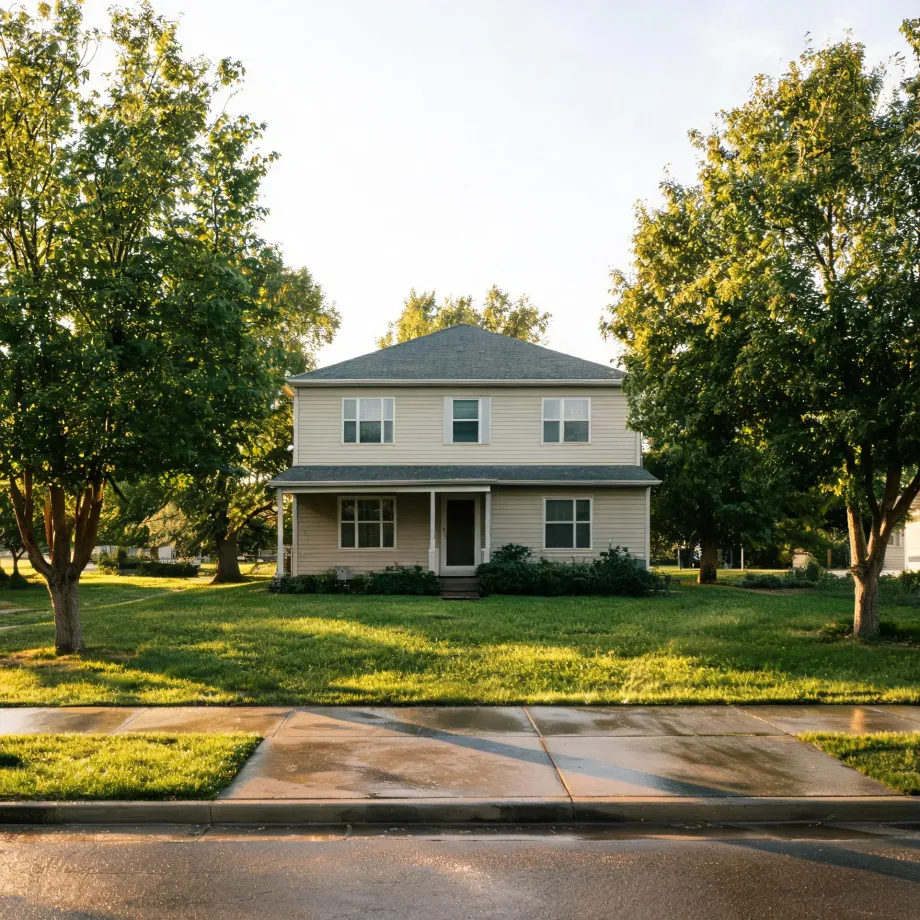
Mini-split systems in Eagle County sit in housing that is recent enough that the building itself rarely drives the repair scope. Half the homes in Eagle County, Colorado were built in 1993 or earlier (2020-2024 ACS 5-year). That matters for repair work because a contractor opening a unit here is not untangling an adaptation between an old structure and equipment it was never designed for. What they find inside the unit, and whether the refrigerant circuit, the condensate drain, and the line set connections have held, is where the repair goes. The house is a reasonable fit for what runs in it.
The Parts of a Mini-split a Contractor Checks First
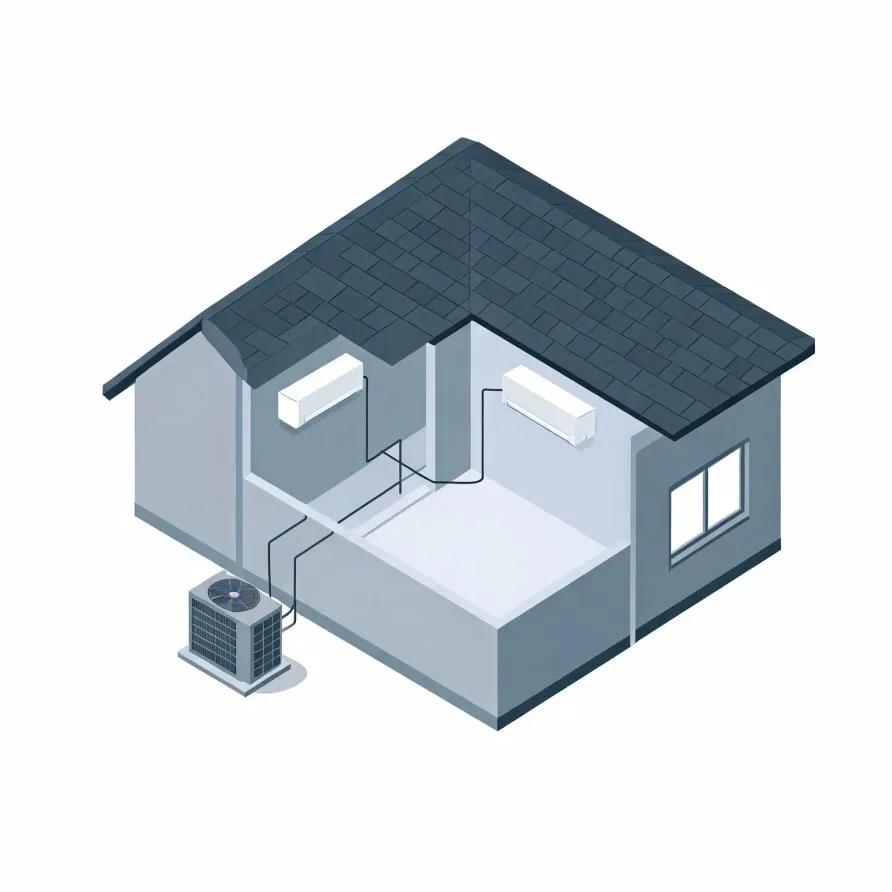
The indoor air handler mounts high on a wall inside the room and pushes conditioned air directly into the space. When it fails, the signs show up where you live: weak airflow, odd smells, or a unit that runs but does nothing useful. The evaporator coil and the blower wheel inside it are where a contractor starts.
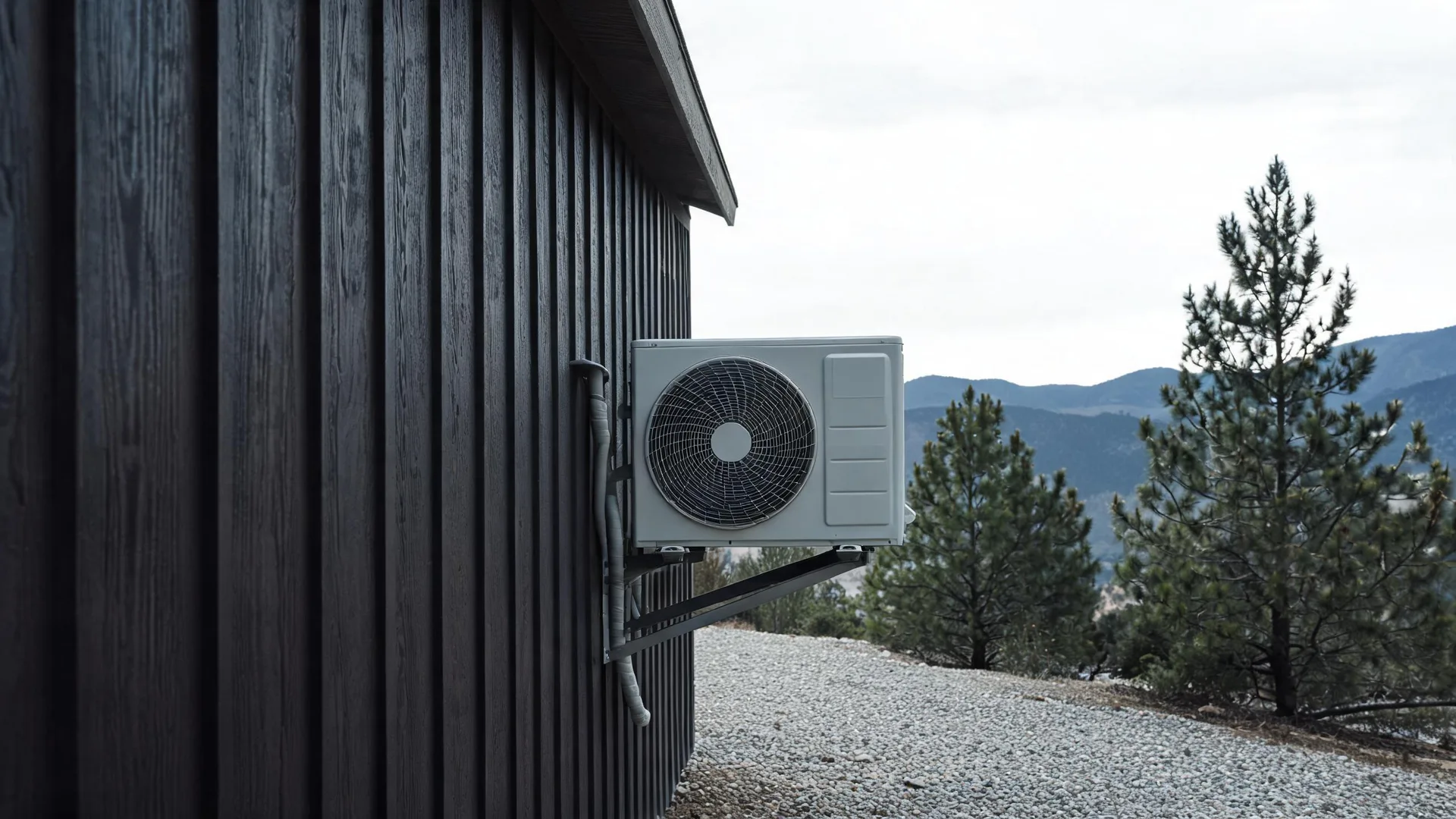
Outside, the condenser unit holds the compressor and the condenser coil. The refrigerant line set runs between the two units, carrying the charge that makes the whole system work. A fault in the outdoor unit or a leak along the line set can mimic problems that look like they belong to the indoor side.
The drawing shows the general layout of a mini-split system, and a licensed contractor determines what applies to your specific installation.
Get matched in Eagle CountyEagle County, by the numbers
158 severe weather events were recorded in Eagle County, Colorado between 2015 and 2024.
NOAA National Centers for Environmental Information, Storm Events Database, bulk CSV export, events 2015-01-01 through 2024-12-31.Half the homes in Eagle County, Colorado were built in 1993 or earlier (2020-2024 ACS 5-year).
U.S. Census Bureau, 2020-2024 American Community Survey 5-Year EstimatesEagle County, Colorado holds 33,915 housing units (2020-2024 ACS 5-year).
U.S. Census Bureau, 2020-2024 American Community Survey 5-Year EstimatesOwners occupy 65.9% of the occupied homes in Eagle County, Colorado (2020-2024 ACS 5-year).
U.S. Census Bureau, 2020-2024 American Community Survey 5-Year EstimatesSevere Weather in Eagle County
Eagle County's climate puts real strain on heating and cooling equipment, and that strain drives repair needs. Understanding the local weather record is part of understanding why mini-split systems here work as hard as they do.
158 severe weather events, 2015–2024. Source: NOAA National Centers for Environmental Information, Storm Events Database.