Tell us about the job
Takes about a minute. No obligation.
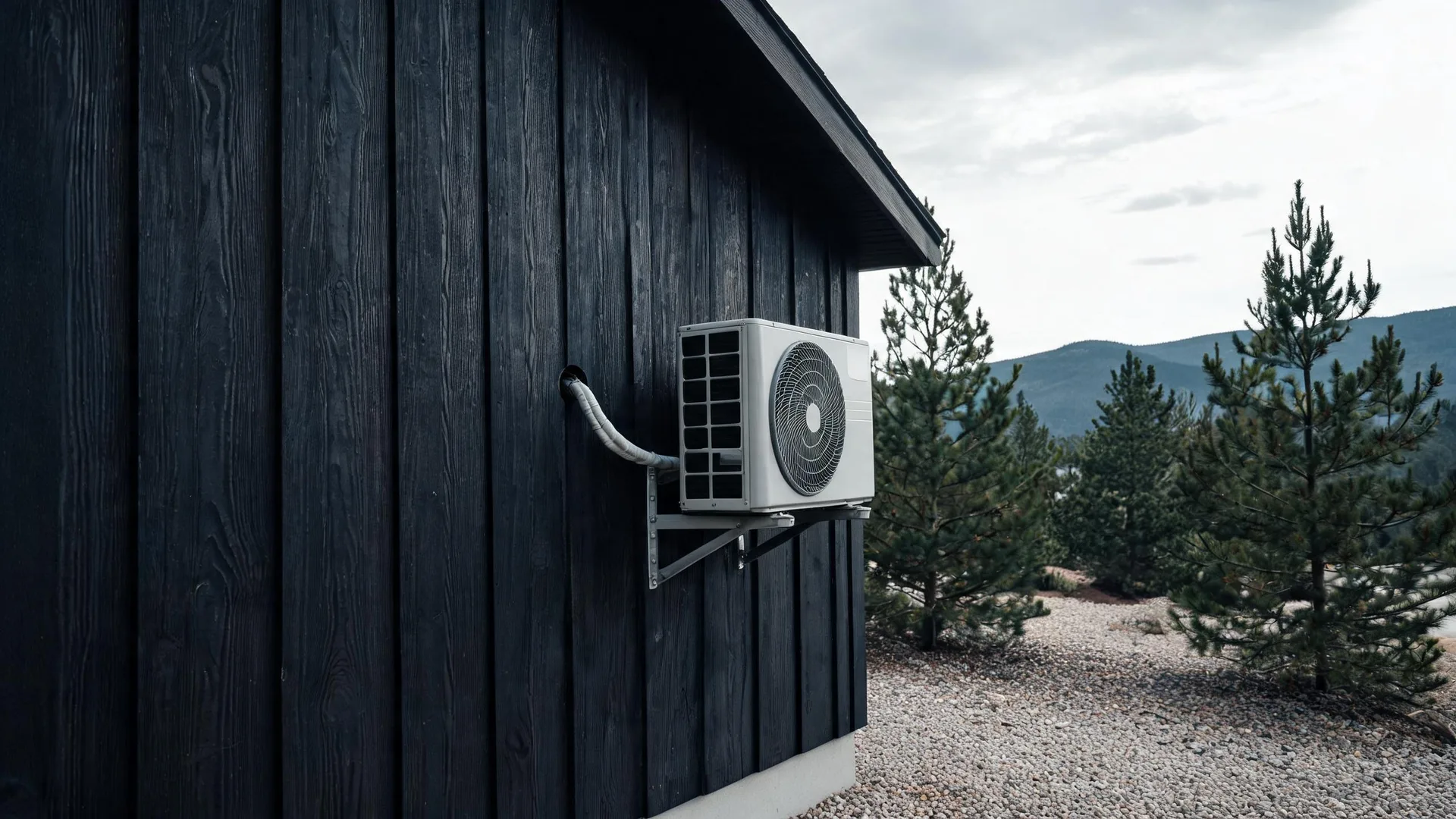
A contractor quoting a mini-split install in Eagle County sizes for one load: heating. Homes in Eagle County, CO have essentially no cooling season — no month of the year is warm enough to call for it. The compressor's refrigerant circuit still runs in heating mode through the cold months, building hours on the reversing valve and the outdoor coil, but it never cycles into cooling. That asymmetry changes what a careful installer prices first. Capacity at low outdoor temperatures, defrost performance, and backup heat provisions take priority over any cooling-mode spec, because the cooling side of the system effectively sits idle year-round.
Electrical service is where mini-split installations in Eagle County most often hit a constraint. Half the homes in Eagle County, Colorado were built in 1993 or earlier (2020-2024 ACS 5-year). Houses built around that period were wired for the loads of their era, and ductless systems were not part of that calculation. A contractor sizing a new mini-split checks the panel before anything else, because a service upgrade changes the scope and the timeline of the job in ways the equipment selection alone never does.
What a Mini-split Installation Puts in Your Home
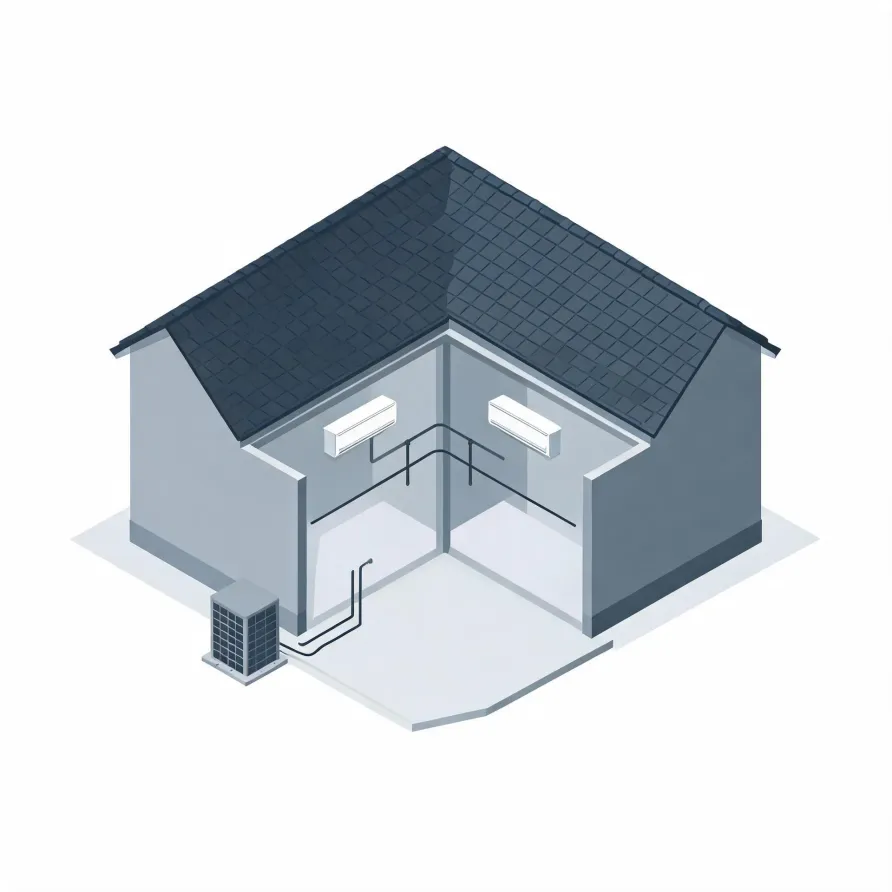
The indoor air handler mounts high on an interior wall, inside the room being conditioned, and moves treated air directly into that space. The outdoor unit sits on the ground or a bracket outside the house and carries the compressor and condenser coil. Together, these two units are the core of what a contractor installs.
A refrigerant line set runs through a small hole in the wall to connect the indoor and outdoor units, and a condensate drain line carries moisture from the indoor handler to the outside. A dedicated electrical disconnect is mounted near the outdoor unit as part of the same installation.
The drawing shows a typical layout, and a licensed contractor determines exactly how each piece is positioned in your specific home.
Find a contractor in Eagle CountyEagle County, by the numbers
158 severe weather events were recorded in Eagle County, Colorado between 2015 and 2024.
NOAA National Centers for Environmental Information, Storm Events Database, bulk CSV export, events 2015-01-01 through 2024-12-31.Half the homes in Eagle County, Colorado were built in 1993 or earlier (2020-2024 ACS 5-year).
U.S. Census Bureau, 2020-2024 American Community Survey 5-Year EstimatesEagle County, Colorado holds 33,915 housing units (2020-2024 ACS 5-year).
U.S. Census Bureau, 2020-2024 American Community Survey 5-Year EstimatesOwners occupy 65.9% of the occupied homes in Eagle County, Colorado (2020-2024 ACS 5-year).
U.S. Census Bureau, 2020-2024 American Community Survey 5-Year EstimatesSevere Weather Events in Eagle County
Elevation and mountain exposure shape the thermal load a mini-split carries here, and weather records are part of that picture. How hard the climate pushes on a home determines how hard the equipment has to work, which is why local conditions matter when sizing and installing a system.
158 severe weather events, 2015–2024. Source: NOAA National Centers for Environmental Information, Storm Events Database.