Tell us about the job
Takes about a minute. No obligation.
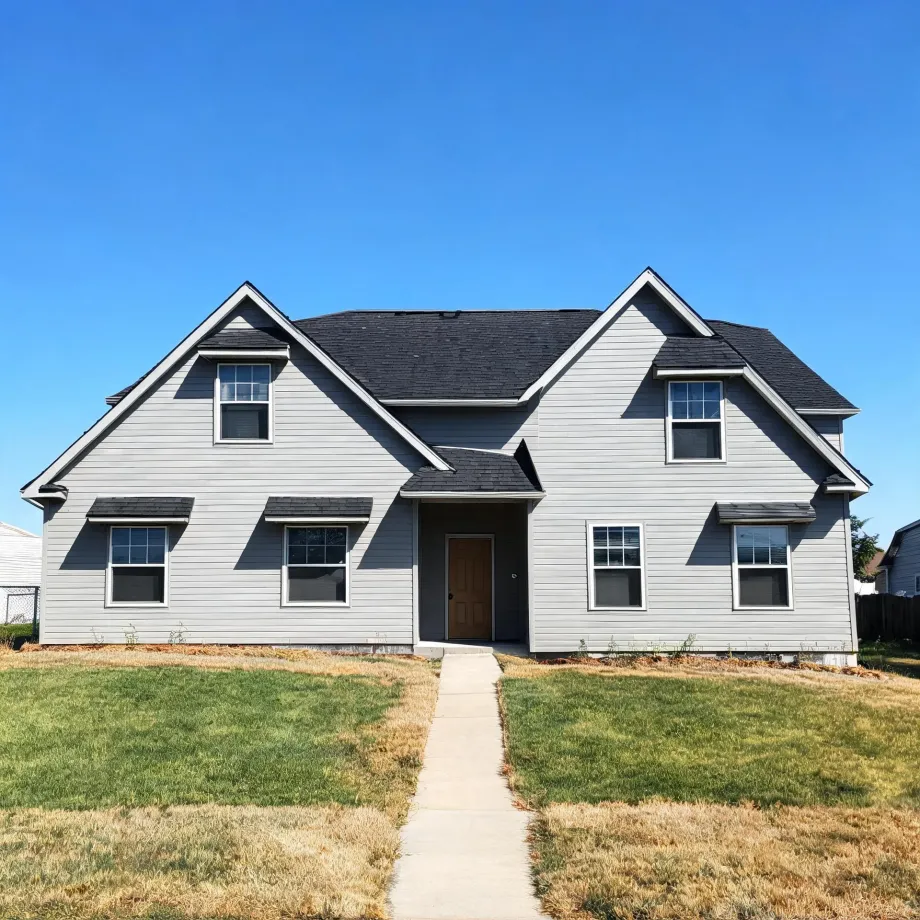
Sizing a mini-split for Summit County means accounting for heating demand alone. Homes in Summit County, CO have essentially no cooling season — no month of the year is warm enough to call for it. A contractor quoting an install here builds the load calculation around cold-weather output, because the compressor and refrigerant circuit will run through sustained heating cycles without the relief a cooling season would otherwise provide. Low-ambient capacity, refrigerant charge, and the placement of the outdoor head all bear on how the system holds up under that one-sided load. An installer who treats those as secondary questions leaves the homeowner with a system that was never matched to what this address actually asks of it.
Electrical service is where a mini-split installation in Summit County gets settled. Half the homes in Summit County, Colorado were built in 1989 or earlier (2020-2024 ACS 5-year). Houses wired for the equipment of that era were sized for loads a modern mini-split outdoor unit can exceed, and a contractor has to open the panel and measure what is there before the quote reflects reality. The unit itself is straightforward to specify. What it has to plug into is the variable.
What a Mini-split Installation Puts in Your Home
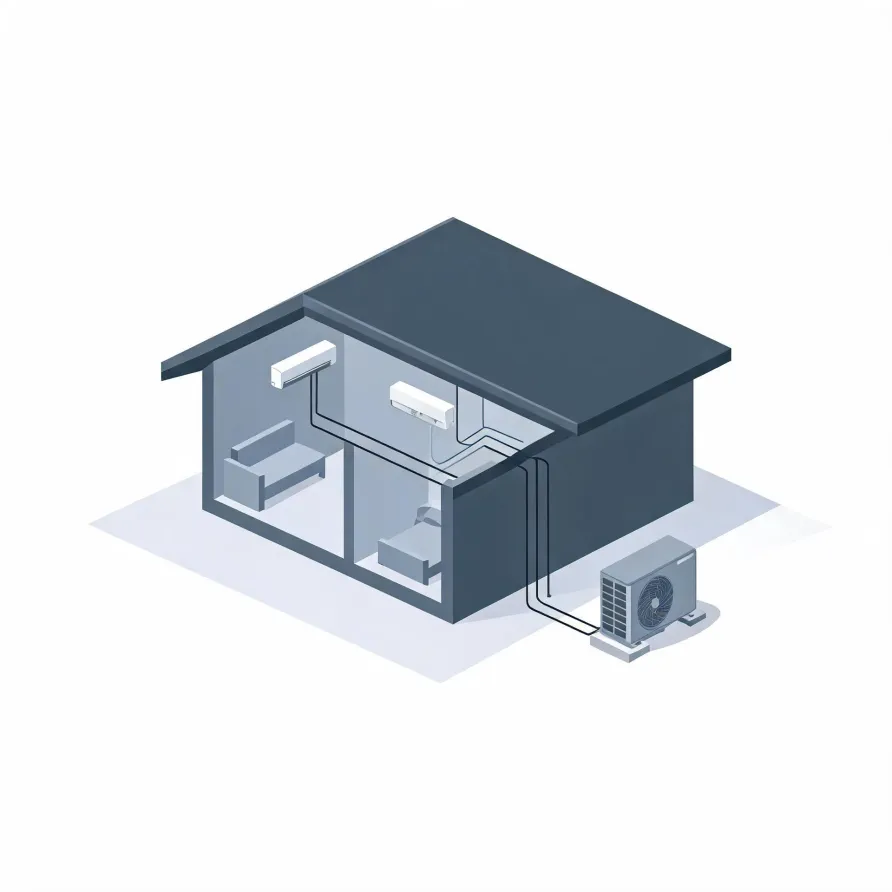
The indoor air handler mounts high on an interior wall inside the room being conditioned, and it is the piece a homeowner sees every day. The outdoor unit sits on the ground or a pad outside the house and holds the compressor and condenser coil. Together these two units do the work of moving conditioned air where it is needed.
A refrigerant line set runs through a small hole in the wall to connect the indoor and outdoor units, carrying the refrigerant between them. A condensate drain line runs alongside it to carry moisture away from the indoor unit. A dedicated electrical circuit feeds the outdoor unit directly.
The drawing shows the general layout of a mini-split system, and a licensed contractor determines exactly how each piece fits the conditions in your house.
Find a contractor in Summit CountySummit County, by the numbers
89 severe weather events were recorded in Summit County, Colorado between 2015 and 2024.
NOAA National Centers for Environmental Information, Storm Events Database, bulk CSV export, events 2015-01-01 through 2024-12-31.Half the homes in Summit County, Colorado were built in 1989 or earlier (2020-2024 ACS 5-year).
U.S. Census Bureau, 2020-2024 American Community Survey 5-Year EstimatesSummit County, Colorado holds 32,251 housing units (2020-2024 ACS 5-year).
U.S. Census Bureau, 2020-2024 American Community Survey 5-Year EstimatesOwners occupy 72.1% of the occupied homes in Summit County, Colorado (2020-2024 ACS 5-year).
U.S. Census Bureau, 2020-2024 American Community Survey 5-Year EstimatesSevere Weather Events in Summit County
Summit County's climate puts real pressure on heating and cooling equipment, and that pressure shapes what a mini-split installation here needs to handle. The weather record below is part of that picture.
89 severe weather events, 2015–2024. Source: NOAA National Centers for Environmental Information, Storm Events Database.