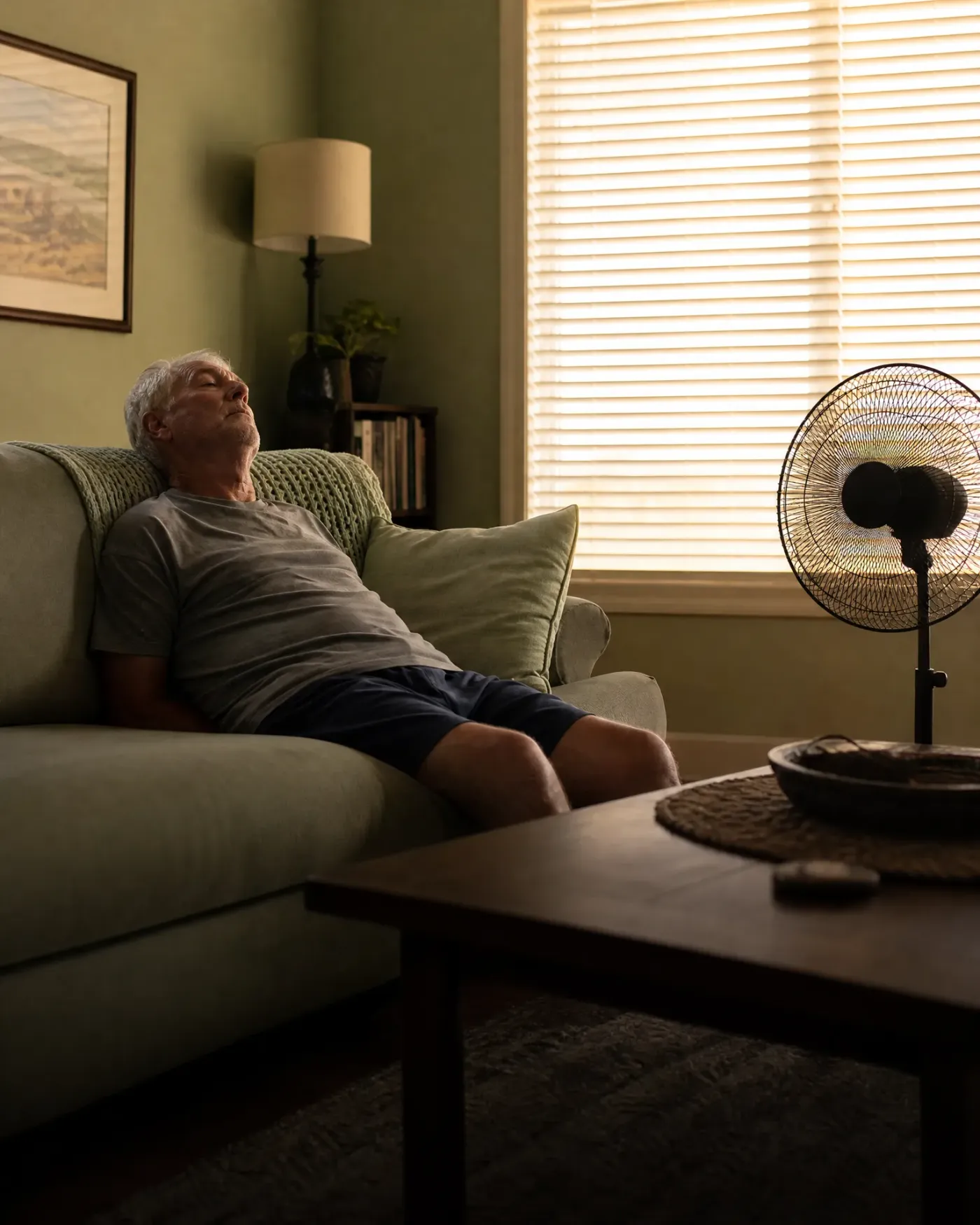

Running the way it should
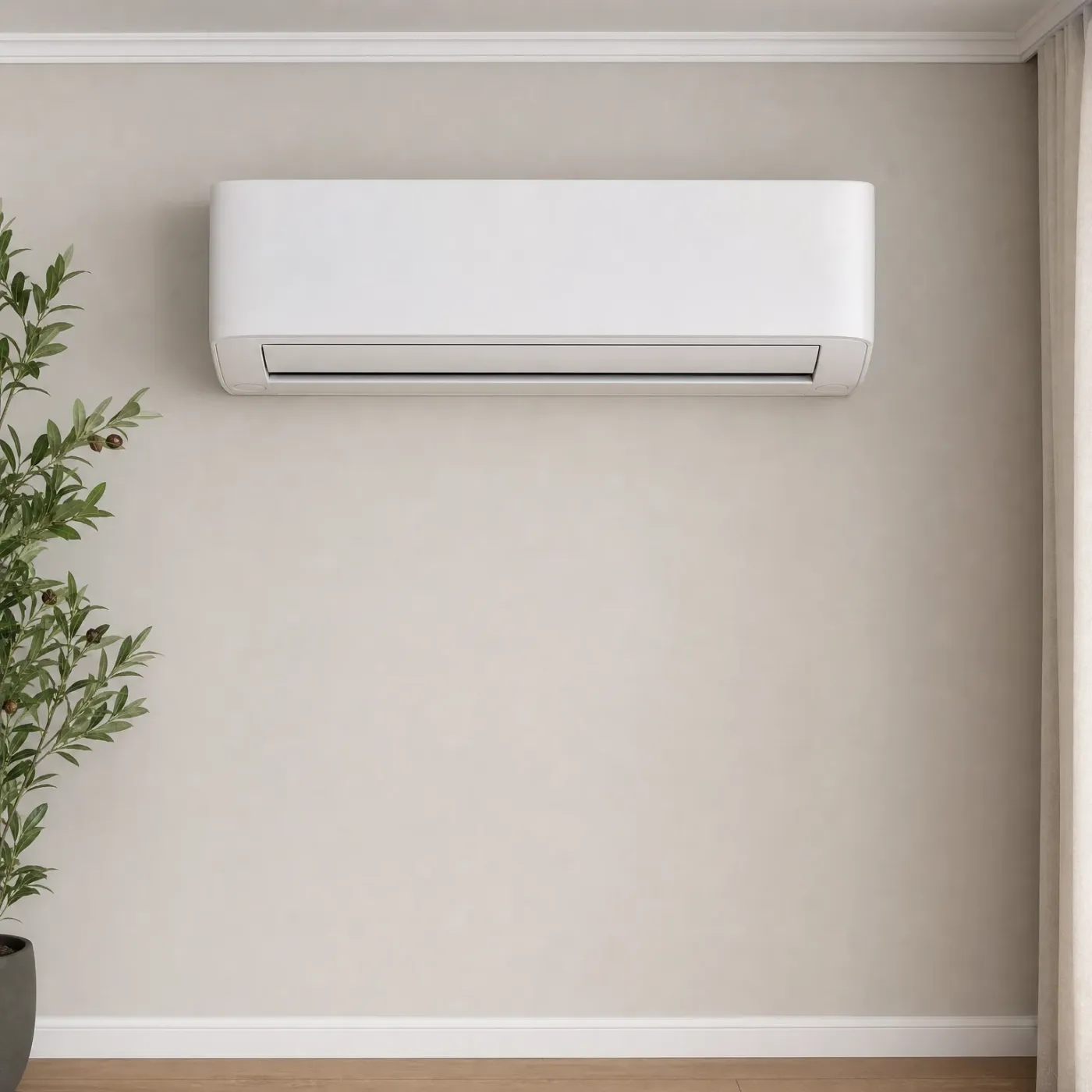
Air comes out of the vent noticeably cooler than the room, and it keeps up even on a hot, dry afternoon. The outdoor unit sits clear of grass clippings and dust. No ice on the lines, no odd noise from the indoor head.
A mini split that won't cool in Colorado Springs is almost always low on refrigerant, blocked at the outdoor unit, or struggling with a dirty filter or coil. Dry summer air here means the outdoor condenser pulls in dust and grass clippings fast, and that buildup on the coil keeps it from shedding heat the way it needs to. Check the filter inside first. If it's gray with dust, clean air can't move through the indoor unit no matter how hard it runs. A unit that runs constantly but never brings the room down usually points to a refrigerant leak, since these systems don't use up refrigerant over time, they lose it through a crack or loose fitting. Ice on the outdoor coil, even in July, means airflow is blocked somewhere and the system is struggling rather than cooling. None of this clears up on its own, and running a unit low on refrigerant or starved for airflow can wear down the compressor faster than it should.
Air comes out of the vent noticeably cooler than the room, and it keeps up even on a hot, dry afternoon. The outdoor unit sits clear of grass clippings and dust. No ice on the lines, no odd noise from the indoor head.

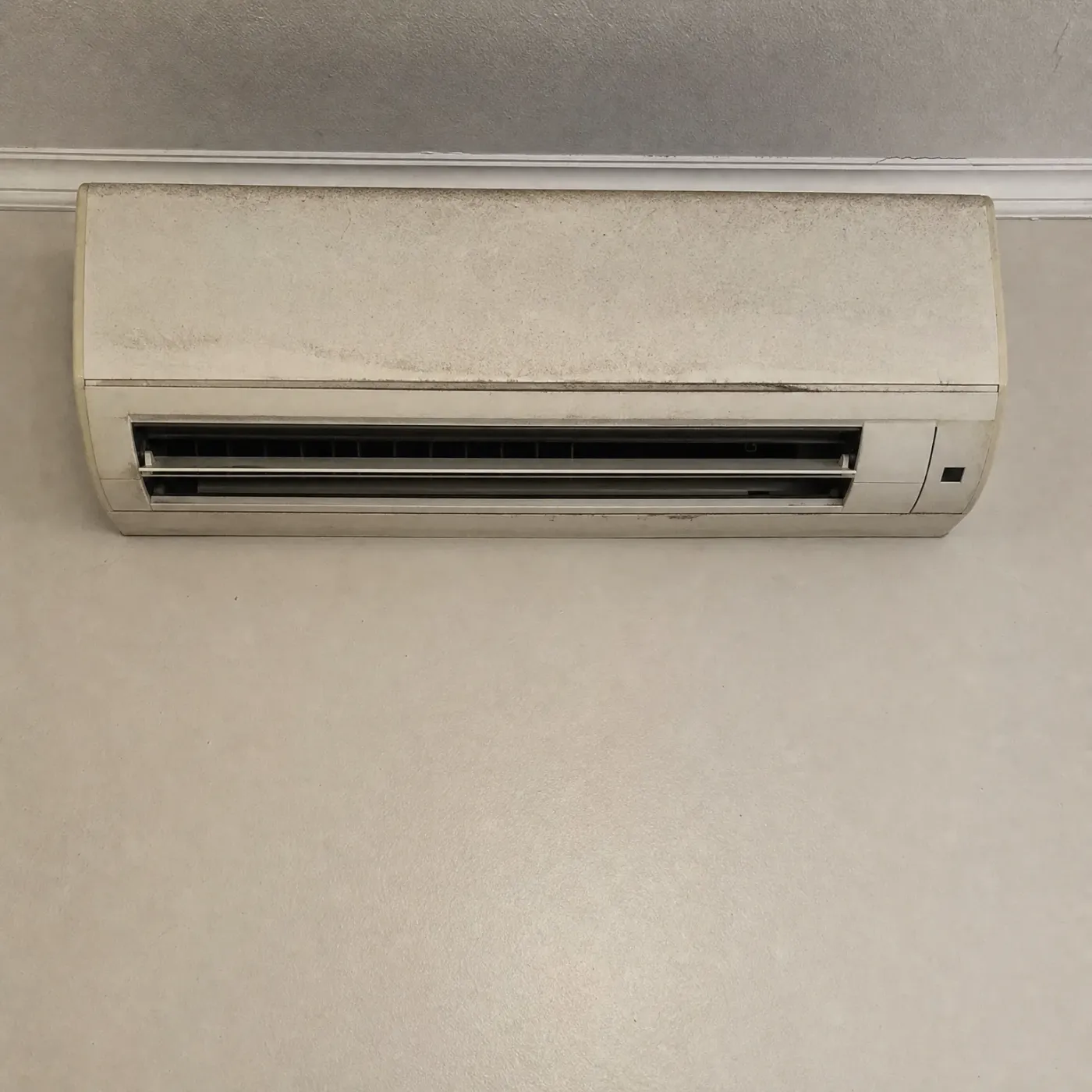
The filter behind that front panel is caked dark with dust and grime, and the coil behind it is just as dirty. Airflow drops, the room stays warm, and the unit runs longer to do less. Left alone, that buildup only gets worse.
Cooling runs July through August
Cooling runs July through August, so a mini split down for a week here is a real loss, not a minor annoyance you can put off.
Heat runs September through May
Heat runs September through May, meaning most of the year this same unit is keeping you warm, not cool. A refrigerant or airflow problem now carries into heating months.
Power here costs 15.63 cents per kilowatt-hour
Power here costs 15.63 cents per kilowatt-hour. A mini split low on refrigerant or clogged at the coil runs longer to do less, and that shows up on the bill.
NOAA nClimDiv 1991-2020 · EIA-861 2025
The condenser outside has to pull air through its coil to shed heat. In Colorado Springs, dry summer air carries dust and grass clippings, and both settle into those fins fast. Once enough builds up, the unit can't move enough air across the coil, and the refrigerant inside can't shed heat the way it's supposed to. The system keeps running, the compressor keeps working, but the air coming out of the indoor head stops getting cold. A few inches of clearance around the unit and a clean coil are what let it do its job. Without that, no setting on the thermostat will fix it.
Every mini split is designed to run with a specific amount of refrigerant sealed inside the line set. That amount doesn't go down on its own. If it drops, there's a leak somewhere in the lines or at a fitting, and the system is losing the one thing it needs to move heat out of your home. Low refrigerant often shows up as ice forming on the copper lines or the indoor coil, even while the room stays warm. It can also make the outdoor unit run longer than it should without the house ever reaching the temperature you set.




A mini split doesn't make cold air, it moves heat out of the room, and that takes a full loop. Refrigerant carries warmth from the indoor coil to the outdoor coil, where the compressor has to ramp through its stages to keep up. On a hot afternoon, a unit stuck on its lowest stage will run without ever catching up to the thermostat setting. The indoor head reads room temperature from a sensor built into the unit itself, so a return vent near a window or a lamp can throw that reading off and keep the system from kicking into the right mode. The reversing valve decides whether the system runs cooling or heat, and if it sticks, the head blows air that never gets cold. Low refrigerant causes its own chain reaction too. It lets the indoor coil ice over, which blocks airflow and makes the unit work harder for less cooling the longer it's left alone. Even drainage plays a part. A clogged condensate line can trip a safety switch and shut the whole system down, which looks like a cooling failure but isn't one.



You've had the laptop open on the desk since lunch, trying to get through a report before the heat in the room wins. By two the mini split is blowing but the air barely registers against your arm. You get up to check the indoor unit and that's when you see it, a wet streak running down the wall underneath, dark against the paint. A towel is already down by the baseboard where the drip has been landing. Outside, the afternoon sun is flat against the window and the room hasn't cooled a degree in an hour. You turn back to the screen, but you keep glancing at the wall every few minutes, watching to see how far the streak has spread.
Explain the mini split problem once instead of to every shop in El Paso County.
You only hire the pro if you want to.
Shut the breaker and look at the condenser. If the fins are packed with dust or grass clippings, clear them with a hose from the inside out, not a pressure washer. Check that nothing sits within a couple feet of it, no patio furniture, no overgrown shrub. If the coil looks clean and the unit still can't keep up once you turn power back on, airflow probably isn't the problem, and something inside the system is.
A gauge set on the lines tells a contractor whether the charge is low, something a hose can't fix. They'll pull the indoor filter and look at the coil behind it, check the line set for a kink or a loose flare fitting, and read the board for a fault code if the unit stores one. That's the difference between guessing at the outdoor unit and knowing what's actually short inside the system.
Two months is a short window, but it's the one that matters. When the mini split quits in July or August, there's no mild stretch coming to bail you out, just more hot, dry afternoons until it's fixed.
NOAA nClimDiv 1991-2020

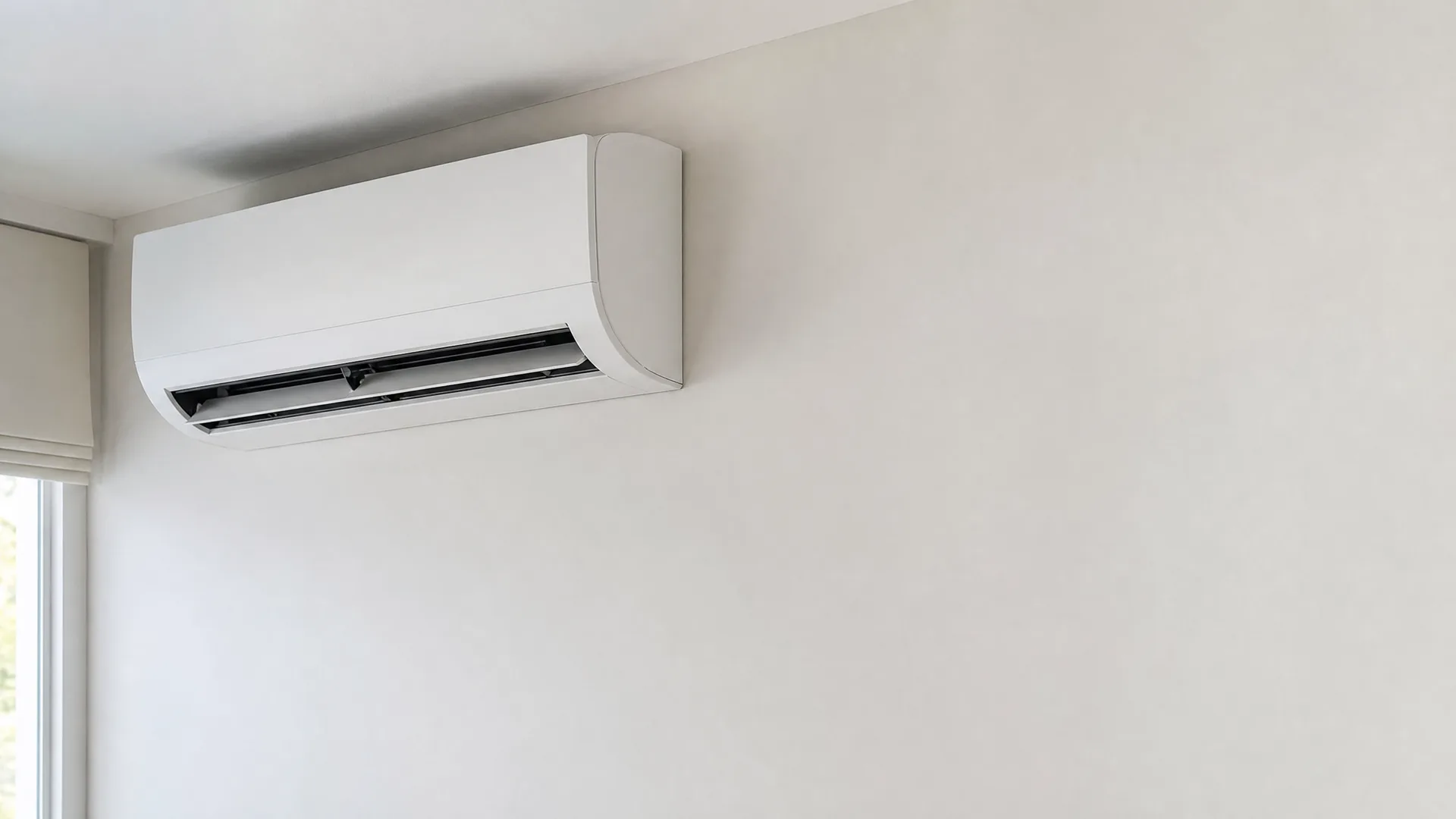
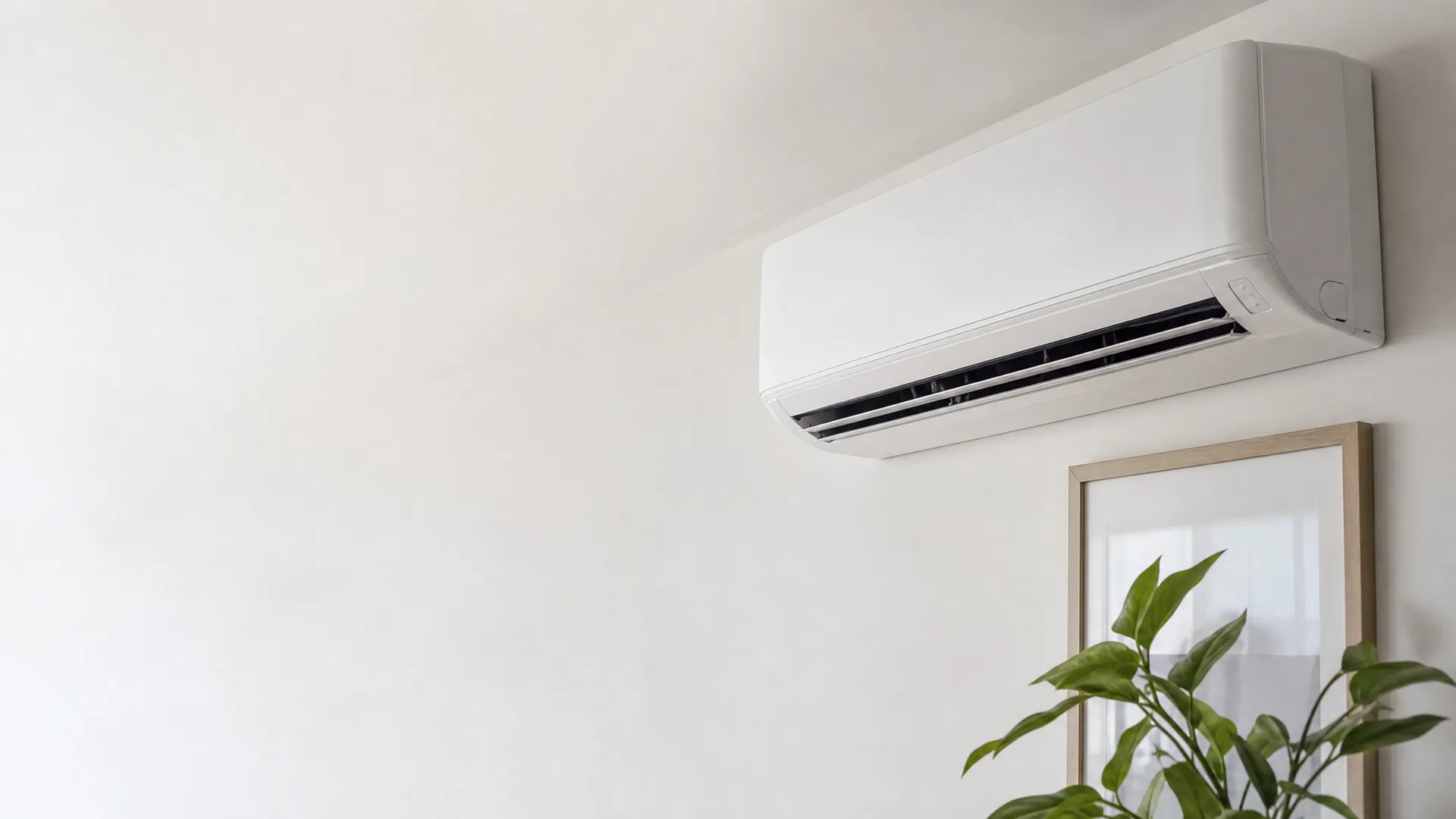
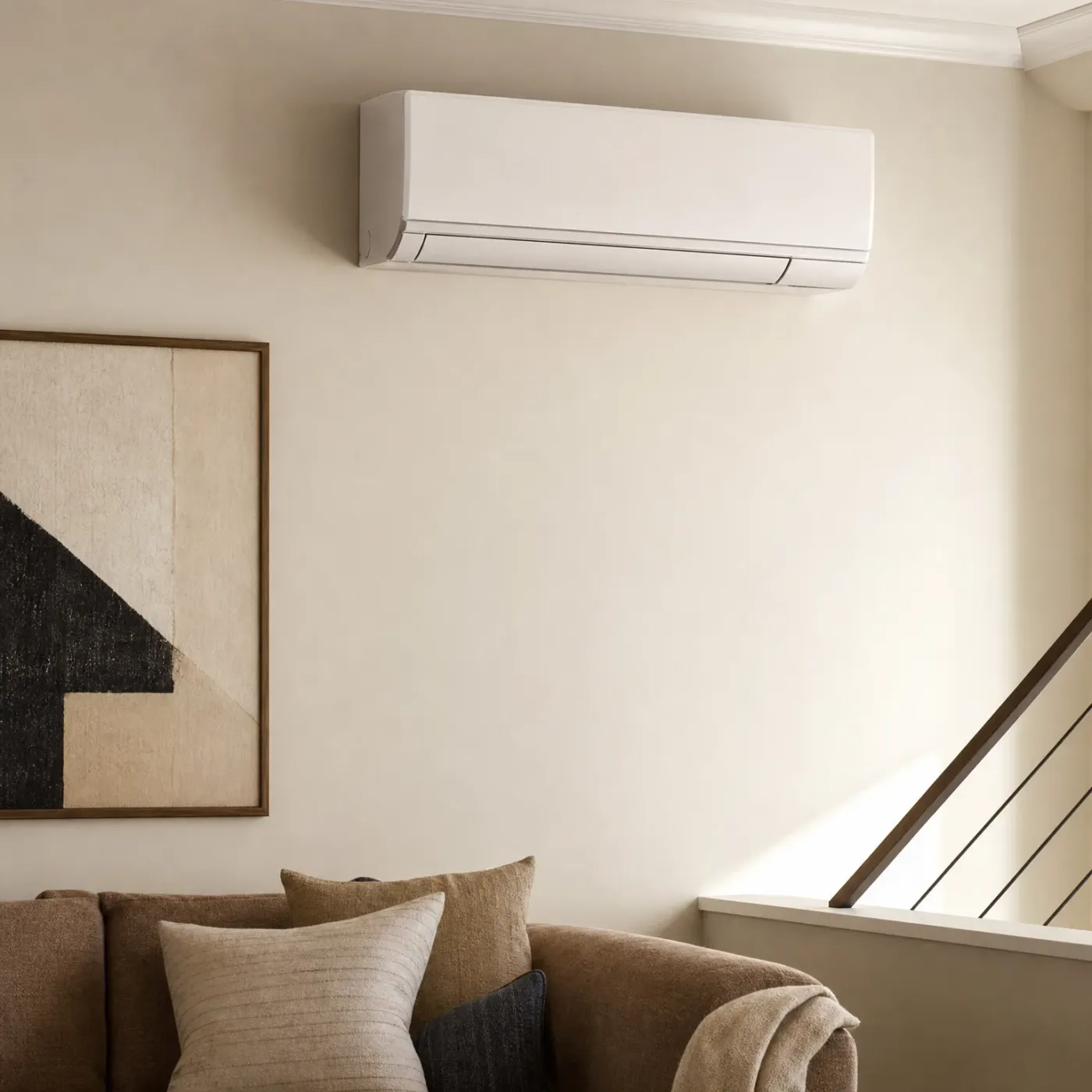
The air handler sits clean near the ceiling, vents and louvers clear. Air moves through it without any drag, and the room cools evenly front to back instead of staying warm in the corners.

Dust has built up across the front panel and into the vents until the louvers barely open. Airflow this blocked means the room stops cooling well before the compressor itself ever fails.
You stand under the vent and feel air moving, maybe even cool air, but the room itself never catches up. The fan sounds normal, the indoor head looks fine, and nothing's leaking or dripping. It's easy to assume the unit is working since it's running, but running and cooling are two different things, and the gap between them usually comes down to one part not doing its job.
A mini split cools by running refrigerant through a coil in the indoor head, and the fan blows room air across that coil to pull heat out of it. If the system is low on refrigerant, or if that coil is coated in dust, the air passing over it never gets cold enough to matter. The fan keeps spinning, so you feel airflow, but it's just room-temperature air moving around. The same thing happens if the outdoor unit can't release heat fast enough, usually because the condenser coil outside is packed with dust or grass clippings. Either way the system is running its cycle without completing the job, and in a hot, dry Colorado Springs afternoon that gap shows up fast.

El Paso County's summer air carries a dew point of 41°F, according to NOAA climate records, which is dry even by Colorado standards. That dryness is why your mini split's condenser can pull in so much dust and grit so fast, but it also means the air in your house gives up its heat easily once the unit is actually working right. So when the system is low on refrigerant or the coil is caked with grime, you won't get that heavy, damp stall you'd feel somewhere humid. You just get a room that slowly climbs past comfortable while the vent still blows something that passes for cool.
NASA POWER T2MDEW
The indoor head pulls warm air from the room across its coil.
Refrigerant inside that coil absorbs the heat and turns to gas.
That gas travels through the line set to the outdoor unit.
The compressor squeezes the gas, which raises its temperature further.

A mini split that runs but doesn't cool in Colorado Springs almost always comes down to one of three things: refrigerant, airflow, or a choked filter and coil. You can check the outdoor unit yourself and clear what you find, but low refrigerant and a stuck vane are jobs for someone licensed to open the system and fix them right.
You don't have to spend your afternoon searching review sites, calling shops that don't pick up, or explaining the same problem three times to three different people before you get a quote. Send the form and the search part is done. You'll know where you stand, and the next hot, dry afternoon won't be the one where you're still figuring out who to call.

Skip calling shops to ask who repairs mini splits in El Paso County.
Asking costs nothing, and the choice to hire stays yours.