Tell us about the job
Takes about a minute. No obligation.
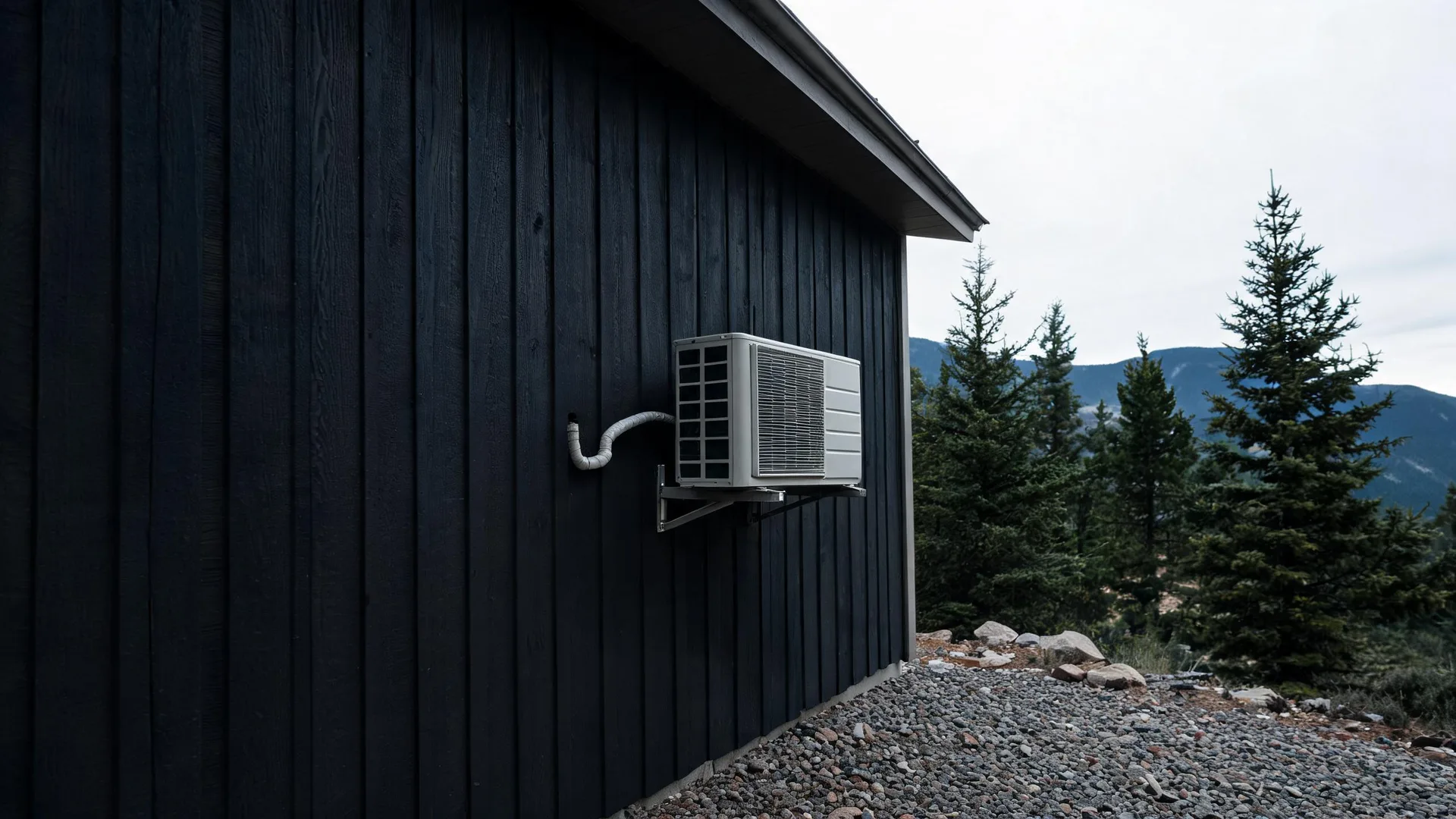
A contractor sizing a mini-split in Teller County works out one thing before anything else: this unit will run almost entirely in heating mode. Homes in Teller County, CO have essentially no cooling season — no month of the year is warm enough to call for it. The compressor, the outdoor coil, and the reversing valve will spend the year moving heat into the house, not out of it. That shifts what the installation has to get right. An undercharged system reveals itself on the coldest days, when demand is highest and there is no summer cooling load that would have flagged the problem earlier. The refrigerant charge and the heat-load calculation need to be correct from day one.
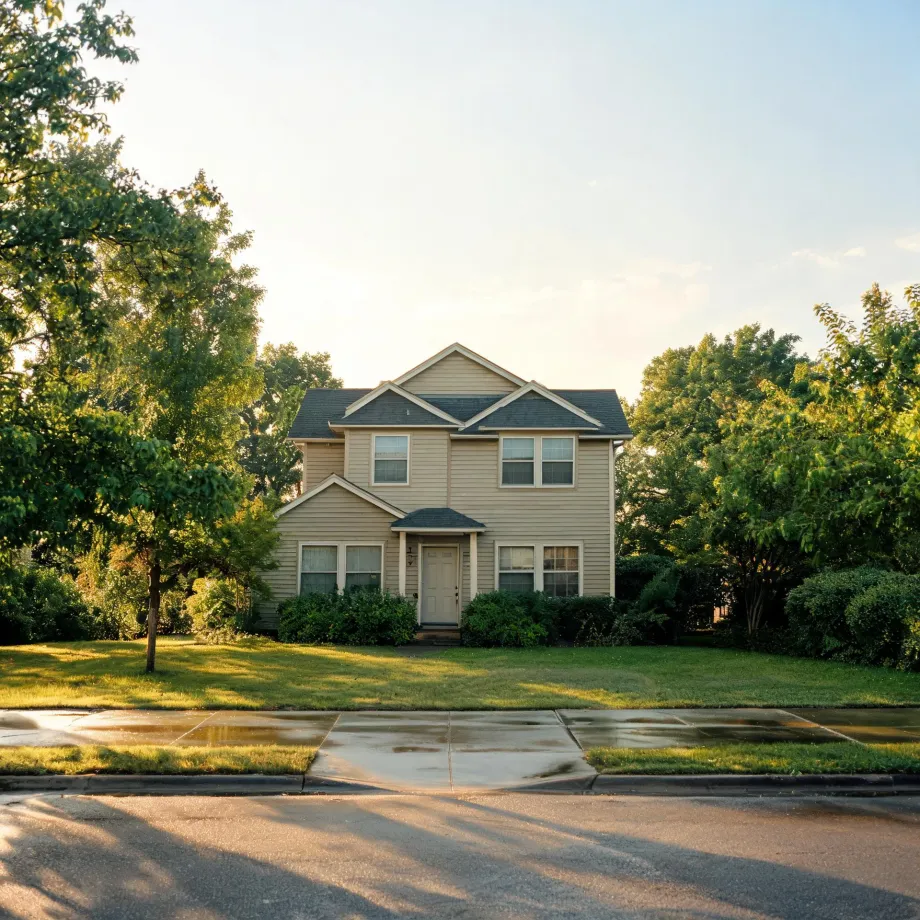
Electrical service is where most mini-split installs in Teller County get complicated. Half the homes in Teller County, Colorado were built in 1990 or earlier (2020-2024 ACS 5-year). A house wired for the equipment that was standard when it was built often runs a service panel that a ductless system will push against, and a contractor has to establish that before anything else gets priced. The unit itself goes in fast once the electrical question is answered.
What a Mini-split Installation Puts in Your Home
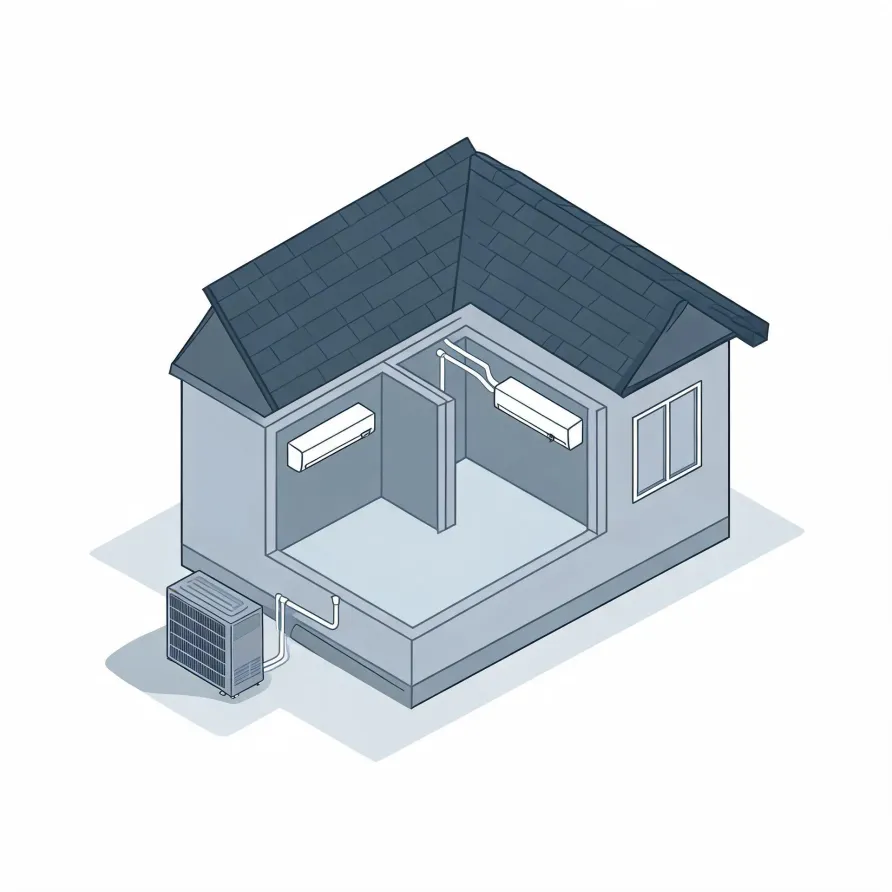
The indoor air handler mounts high on a wall inside the room being conditioned, delivering conditioned air directly into the space. Outside the house, the outdoor unit houses the compressor and does the mechanical heavy lifting for the whole system. Each indoor unit serves its own zone.
A refrigerant line set runs through a small penetration in the wall, connecting the indoor and outdoor units. A condensate drain line runs alongside it, carrying moisture out of the house. Some installations also include a dedicated disconnect box mounted near the outdoor unit.
The drawing shows a typical layout, and a licensed contractor determines exactly how the system comes together in your home.
Find a contractor in Teller CountyTeller County, by the numbers
249 severe weather events were recorded in Teller County, Colorado between 2015 and 2024.
NOAA National Centers for Environmental Information, Storm Events Database, bulk CSV export, events 2015-01-01 through 2024-12-31.Half the homes in Teller County, Colorado were built in 1990 or earlier (2020-2024 ACS 5-year).
U.S. Census Bureau, 2020-2024 American Community Survey 5-Year EstimatesTeller County, Colorado holds 13,674 housing units (2020-2024 ACS 5-year).
U.S. Census Bureau, 2020-2024 American Community Survey 5-Year EstimatesOwners occupy 81.0% of the occupied homes in Teller County, Colorado (2020-2024 ACS 5-year).
U.S. Census Bureau, 2020-2024 American Community Survey 5-Year EstimatesSevere Weather Events in Teller County
Teller County's climate puts real demands on heating and cooling equipment, and weather extremes are part of what determines how hard a system has to work year after year. That workload shapes which equipment fits the area and how a contractor sizes and installs it.
249 severe weather events, 2015–2024. Source: NOAA National Centers for Environmental Information, Storm Events Database.