
Running quiet
A mini split in good shape hums low and even, even on a cold morning. Air moves steady out of the vents. No clicking, no cracking, no grinding from the outdoor unit when the compressor kicks on.
Cold mornings here, and the outdoor unit is clicking, cracking, or running louder than it did in October. You're not imagining it. Mini splits work harder once temperatures drop into the teens and single digits, and most homeowners notice the sound change right when they need the heat to actually work. You want to know if this is normal cold-weather behavior or a sign something's wearing out.
A mini split pulls heat from outside air even when it's cold out, and when the outdoor coil frosts over, the system reverses itself briefly to melt the ice off. That reversal is where the whooshing or cracking sound comes from, and it's normal. The compressor also runs harder and longer on the coldest nights, so you'll hear more hum and vibration than you did in summer. A rattle or a metal-on-metal sound is different. That usually means a fan blade, a loose panel, or a mount working its way loose, and cold doesn't cause that on its own, it just makes an existing problem more noticeable once the unit is running flat out.

A mini split in good shape hums low and even, even on a cold morning. Air moves steady out of the vents. No clicking, no cracking, no grinding from the outdoor unit when the compressor kicks on.

Dirt and buildup on the vents and casing change how air moves through the unit. That can turn into rattling, knocking, or a labored sound as the system fights to push heat through a blocked path.




When the outdoor unit gets cold enough, ice builds up on the coil and the system has to clear it. It reverses itself for a few minutes, sending heat outside instead of in, and the fan slows or stops while this happens. That's when you hear the clicking as the reversing valve switches, and sometimes a hissing or gurgling as refrigerant changes direction. On its own, this is normal. A mini split in Colorado can run defrost several times on a cold morning. The noise only points to a problem when it's followed by grinding, buzzing, or a unit that won't get back to heating once the cycle ends.
Refrigerant has to work harder to pull heat from outdoor air once that air drops into the teens or single digits. The compressor runs at a higher speed and for longer stretches to keep up, and a compressor running harder is a compressor running louder. Parts that were quiet at 50 degrees start to tick as metal contracts in the cold. None of that means something's broken. It means the system is doing more work for the same result. If the sound changes character instead of just volume, if it starts rattling or shrieking, that's a part wearing out, not the cold itself.


A night of clicking and cracking from the outdoor unit isn't just noise. It means the system is straining to pull heat out of air that's already near freezing, and straining parts wear out faster.
Ignore it through a Colorado winter and a worn bearing or a failing fan motor doesn't wait for spring. It usually quits on the coldest morning you need the heat most.
At 15.69 cents per kilowatt-hour, every extra hour your outdoor unit spends straining through defrost cycles or grinding on a worn bearing shows up on the bill. A mini split running rough draws more than one running quiet.
EIA-861 2025 statewide residential average
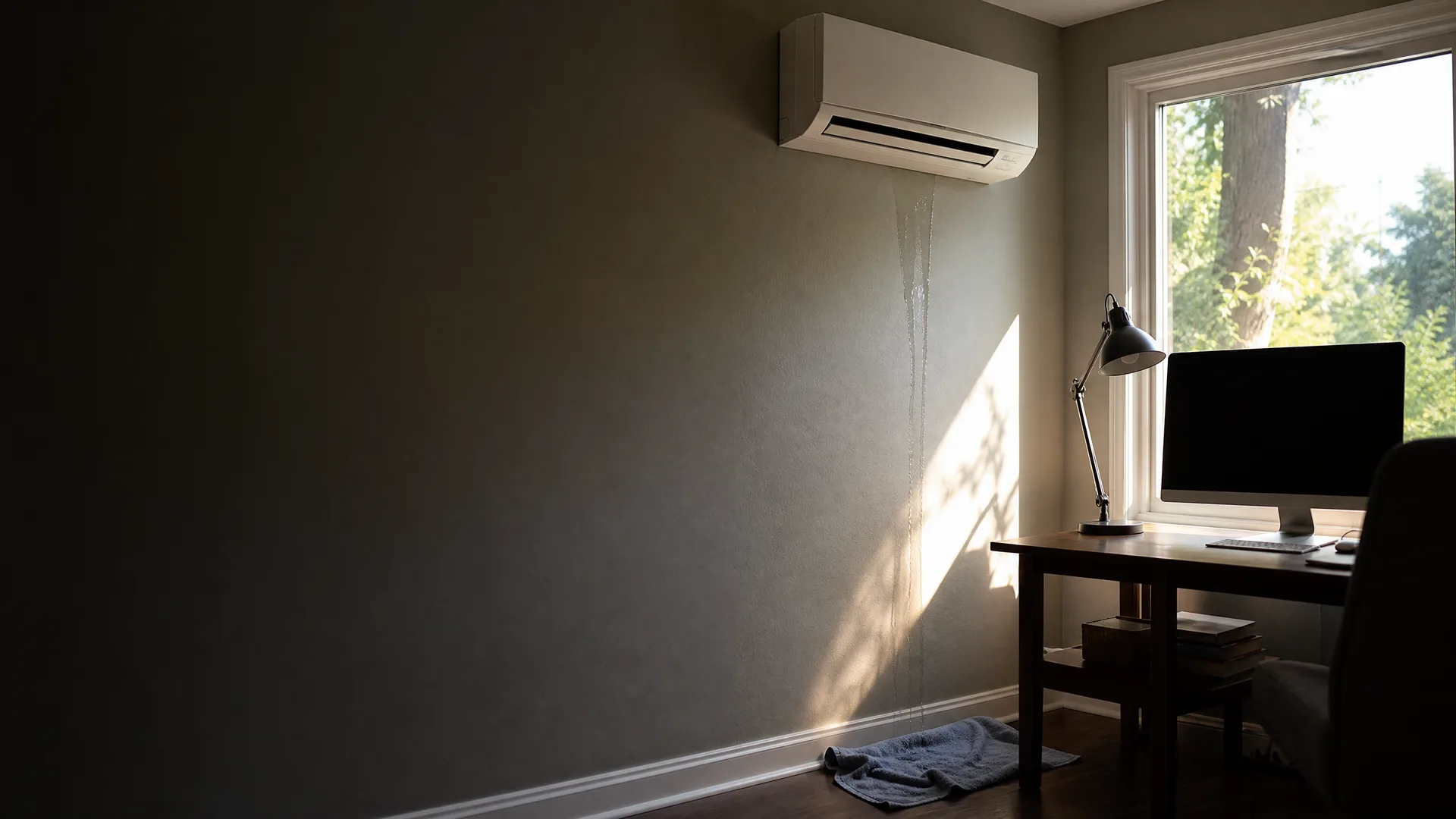
It's July, late afternoon, and you're in the home office trying to get through email before dinner. The mini split indoor unit above the desk has been running the room cool since noon. You look up and notice a dark streak down the wall below it, the paint gone glossy with water. There's already a towel on the floor, soaked through, from the drip you caught this morning and figured was a one-time thing. You stand there a second, thinking about the contractors you'd have to find and call, the same explanation you'd give three different people, before you've even decided what to do about the wall.
You've heard what's normal for a mini split on a cold morning and what isn't, and if your outdoor unit is grinding on a worn bearing or straining through defrost cycles that run long, that's not something to wait out until spring. Left alone, a worn part tends to fail on the coldest night, not the mildest one. Finding someone to look at it usually means searching for a contractor who works on mini splits, calling around to see who can come out, and explaining the noise and when it happens to each one before you can even compare what they'd charge. Send the request here instead and that work is done. You stop sorting through names and quotes and get back to a quiet mini split and a heated home.

A mini split has a reversing valve that switches the refrigerant flow between heating and defrost. When it shifts, you'll hear a thunk or a whoosh from the outdoor unit for a second or two. That's normal. What isn't normal is a grinding or rattling sound that keeps going once the fan spins back up, because that points to the fan motor bearing or a blade that's come loose and is hitting the housing on every rotation.
The compressor itself sits on rubber mounts meant to keep its vibration from carrying into the cabinet. Once those mounts age or the compressor starts working harder in the teens and single digits, that vibration transfers straight into the sheet metal and you get a buzz that wasn't there in October. Figuring out which of these it is from the clicking alone isn't something most homeowners can do standing in the driveway. Rather than calling around to find a contractor who works on mini splits specifically, then describing the sound over the phone and hoping they bring the right parts, you can send the details once and let someone qualified sort out what's actually loose, worn, or failing.


Summers in Colorado run dry, with the dew point averaging 42°F across June, July and August, according to NOAA climate data. That's part of why the mini split barely strains to cool the house in July. Dry air gives up its heat easier, so the indoor unit cycles on and off without laboring, and the outdoor fan runs at a steady pitch. Winter is a different load on the same equipment. The compressor that coasted through summer is now pulling heat out of air near freezing, and that's where the clicking and grinding start. The system you barely noticed in August is the one straining by December.
NASA POWER T2MDEW county cells weighted by homes


A mini split that clicks and cracks on a cold morning is telling you something specific: the defrost cycle is working harder than it should, or a part inside the outdoor unit is wearing down. Either way, the noise doesn't fix itself once spring comes. You could spend an evening searching for someone licensed to work on these systems, calling a few, explaining the clicking and the long defrost runs to each one, then weighing quotes that don't tell you much without seeing the unit. Or you could send this through once and let that part of it be someone else's job. A contractor who knows mini splits can tell you whether it's the reversing valve, a bearing, or buildup on the coil, and get it sorted before the next cold snap makes it worse. The noise has an answer. So does finding the right person to fix it.





Describe what your mini split is doing once, in one form.
You only hire the pro if you want to.