Working the way it should
A mini split like this holds whatever mode you set it to. Switch it to heat and it stays in heat, pulling warm air across the room instead of drifting back to cold or sitting at room temperature on its own.
 Match me with a pro
Tell a local repair pro what your mini split is doing.
Your mini split is running but the air coming out feels cold, or it's blowing room temperature air when you need heat. In Colorado, where most homes rely on gas for heating and lean on the mini split for shoulder season or supplemental warmth, that's a problem worth sorting out before the next cold snap or before a hot, dry stretch turns your cooling into a frustration instead of relief.
There are a handful of reasons this happens. A low refrigerant charge, a failing reversing valve, a dirty filter restricting airflow, a sensor reading wrong, or settings that got changed without you noticing. Some of these you can check yourself. Others need a gauge set and a technician who knows this specific equipment.
Figuring out which one it is from the symptoms alone is hard, and guessing wrong wastes time. That's where this gets complicated for most homeowners: finding someone qualified to work on a mini split specifically, not just a general HVAC outfit, then calling a few, explaining the same problem over and over, waiting on quotes, and trying to compare them without knowing what's a fair price for the diagnosis versus the fix.
This page skips that part. Tell it what's going on with your system, and it matches you with a contractor who works on mini splits in your area and knows what questions to ask about your specific unit. They'll reach out to you directly. No calling around, no repeating yourself to five different companies, no sitting on hold.
What happens after that, the diagnosis, the repair itself, is between you and the contractor. But getting to that first conversation, the one where someone who actually knows this equipment looks at your situation instead of you guessing from a forum post, that part is handled below.
A mini split blowing cold air in heat mode usually means it's stuck in the wrong setting, low on refrigerant, or struggling with a frozen outdoor coil. Check the remote first: a unit set to fan mode or with the temperature set below room temperature will push air that feels cold even though nothing is broken. If the setting is right and the air still isn't warming up, the outdoor unit may have ice built up on its coil, which blocks it from pulling heat from the outside air, or the system may be low on refrigerant after a slow leak. Colorado winters push these units hard, and a mini split that's low on refrigerant or icing over won't recover on its own. Left alone, it runs longer to do less heating, and the strain on the compressor adds up. Catching it now, before the coldest months, is cheaper than waiting for the system to quit.




A mini split heats by reversing the path refrigerant takes through the system, pulling heat from outside air and pushing it through the indoor coil. That coil has to get hot before the fan should blow across it. When it doesn't, you feel room temperature air or something close to it, and it reads as a malfunction even when the unit is technically doing its job partway through a cycle.
Defrost is one normal reason for this. In cold, dry Colorado air, frost can build on the outdoor coil, and the system briefly reverses itself to melt it off before going back to heating. During that stretch, usually a few minutes, the indoor fan may keep running and push cold air into the room. If it happens once in a while, that's the system working as designed. If it happens every ten or fifteen minutes, something is forcing it into defrost too often, often restricted airflow around the outdoor unit or a refrigerant charge that's dropped below what the system needs.
The reversing valve itself can fail partway, letting refrigerant flow in both directions at once, which means the indoor coil never fully commits to heating. A bad thermistor causes a quieter version of the same problem: it misreports room temperature to the control board, so the board never tells the compressor to work harder. Either fault looks the same from the couch, cold or lukewarm air, but they're different repairs.



You're at your desk on a July afternoon, blinds half shut against the sun, and you notice the wall under the indoor unit looks wrong. A dark streak runs down from the housing toward the baseboard. You already put a towel down yesterday when you first saw it beading up, and now it's damp again. The unit's still running, air coming out but not cold the way it should be on a day like this. You press the remote a couple of times, like that'll change anything. It won't. Somewhere behind that wall, ice built up on the coil and it's melting onto your floor now, and you're done guessing which part of the system did it.
Describe what your mini split is doing once, in one form.
You're not committing to anything by asking.

A mini split like this holds whatever mode you set it to. Switch it to heat and it stays in heat, pulling warm air across the room instead of drifting back to cold or sitting at room temperature on its own.

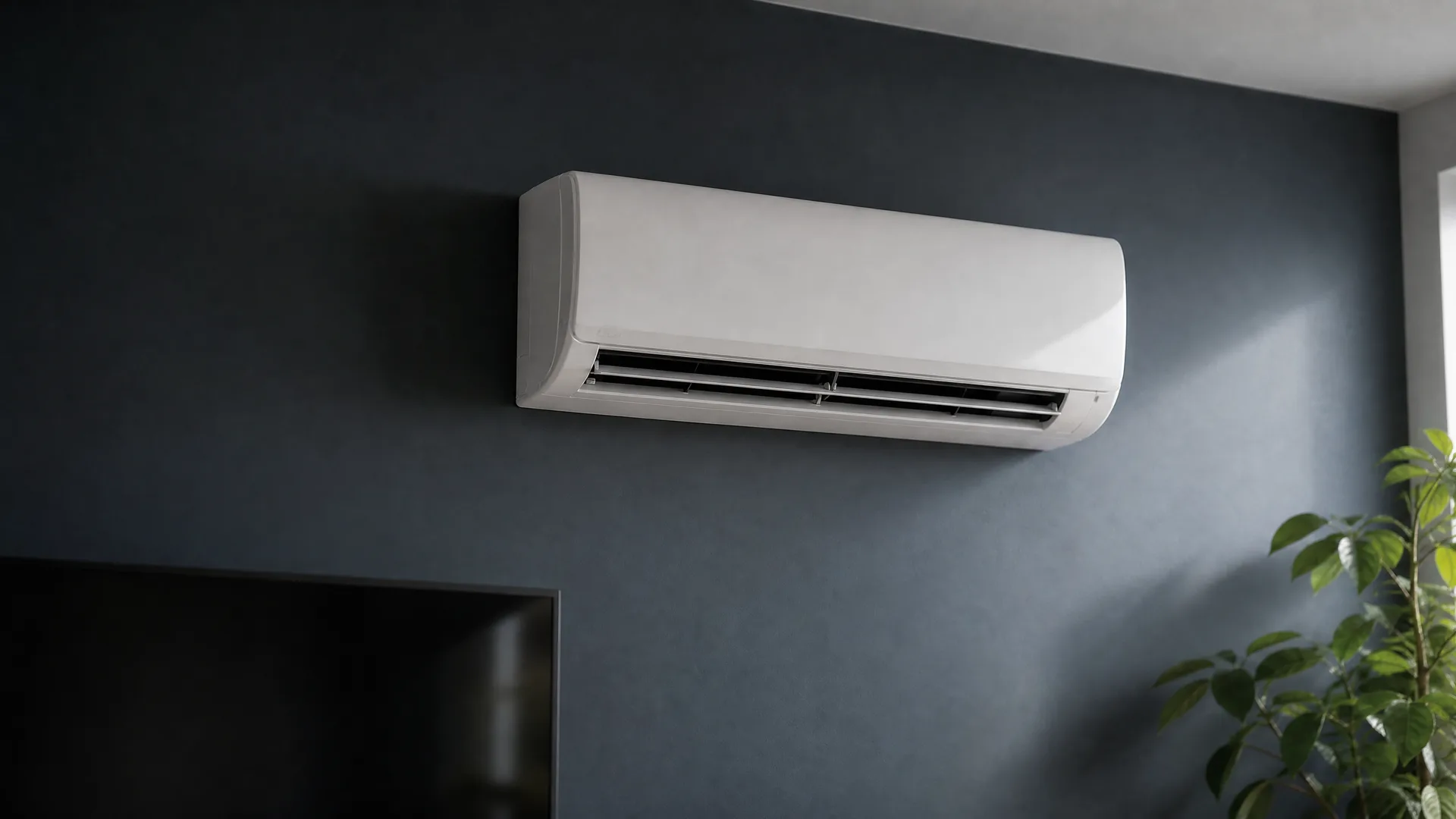
That discoloring on the casing and the dust built up around the louvers point to a unit that's been running hard for a while. A mini split in that shape is more likely to stall in the wrong mode or lose its heat output altogether.
It's set to heat, the fan is running, and the air hitting your hand is cold or barely warm. In a Colorado winter that's not a small annoyance, it's the difference between a comfortable room and one you avoid. Before assuming the unit is broken, it helps to know what's actually supposed to happen inside it when it switches to heat mode, and where that process tends to go wrong.
A mini split makes heat by reversing the flow of refrigerant, sending it through the outdoor coil first so it can pull in outside warmth before moving it inside. That switch happens at the reversing valve. If the valve doesn't fully shift, refrigerant flows in both directions at once and the indoor coil never gets properly warm. The other common cause is defrost. Colorado's cold, dry air lets frost build fast on the outdoor coil, and the unit has to pause heating every so often to melt it off. During that pause it can blow cool air inside for a few minutes before switching back. One lasts briefly and ends on its own. The other doesn't correct itself.
Colorado winters run cold and dry, and that dry air changes how a heat pump behaves outside. The outdoor coil pulls heat from the air even at low temperatures, but frost still builds on it during long cold stretches. The unit has to pause and run a defrost cycle to clear that frost before it can keep heating. If defrost is running more than it should, or not finishing clean, the indoor unit keeps blowing air that never warms up.
Mini splits are charged with a specific amount of refrigerant for the line length and the conditions they're installed in. At Colorado elevations, a system low on charge struggles more to move heat than the same unit would at sea level, because the refrigerant has less to work with on each pass through the coil. A unit that's low will often run constantly without the room reaching the temperature set on the remote, and the air at the vent stays cooler than it should.
At 15.69 cents per kilowatt-hour, running a mini split on backup electric heat while the reversing valve or a frozen coil keeps it stuck blowing cold adds up fast. Gas furnace heat stays cheaper here, so a mini split that won't hold its heat setting is costing you more than it should.
EIA-861 2025 statewide residential average

This is a mini split doing its job. Set it to heat and the air coming off the wall unit stays warm, no drift back to cold, no guessing when you walk past it. The coil stays clean enough that the system doesn't have to fight itself to keep up.

Grime like this along the vents is a sign the coil underneath is just as dirty, and a dirty coil struggles to hold temperature or defrost properly. A unit in this shape is the one more likely to blow cold air in heat mode, or get stuck between settings until a contractor sorts it out.



Colorado summers run dry. Average dew point across June, July and August is 42°F, measured over where homes in the state actually sit, and that's low. Low humidity means your mini split in cooling mode isn't fighting much moisture out of the air, so it shouldn't be struggling or icing up from a heavy coil load. If it's blowing cold air when it shouldn't, or not holding the temperature you set, dry air isn't the reason. That points back to the mode setting, the refrigerant charge, or the reversing valve, not the weather outside.
NASA POWER T2MDEW county cells weighted by homes


Thermostat calls for heat and signals the indoor unit's control board.
The reversing valve shifts to send refrigerant through the system backward.
Compressor pressurizes refrigerant gas, heating it before it reaches indoors.
Indoor coil releases that heat into the air the fan pushes out.

A reversing valve stuck halfway, a frozen outdoor coil, low refrigerant, or a setting that's off all point to a fix, not a mystery. You don't have to figure out which one it is before you act on it. That's the part a contractor sorts out once they're looking at your unit.
What you don't have to do is spend your afternoon on it. No calling around to three or four companies, no repeating what the wall unit's been doing every time someone new picks up the phone, no sitting on quotes trying to guess which one is fair. You answer a few questions about what your mini split is doing, and a contractor who works on these systems in Colorado gets in touch with you directly. You're not left chasing this down on your own.

Get your mini split to the right pro