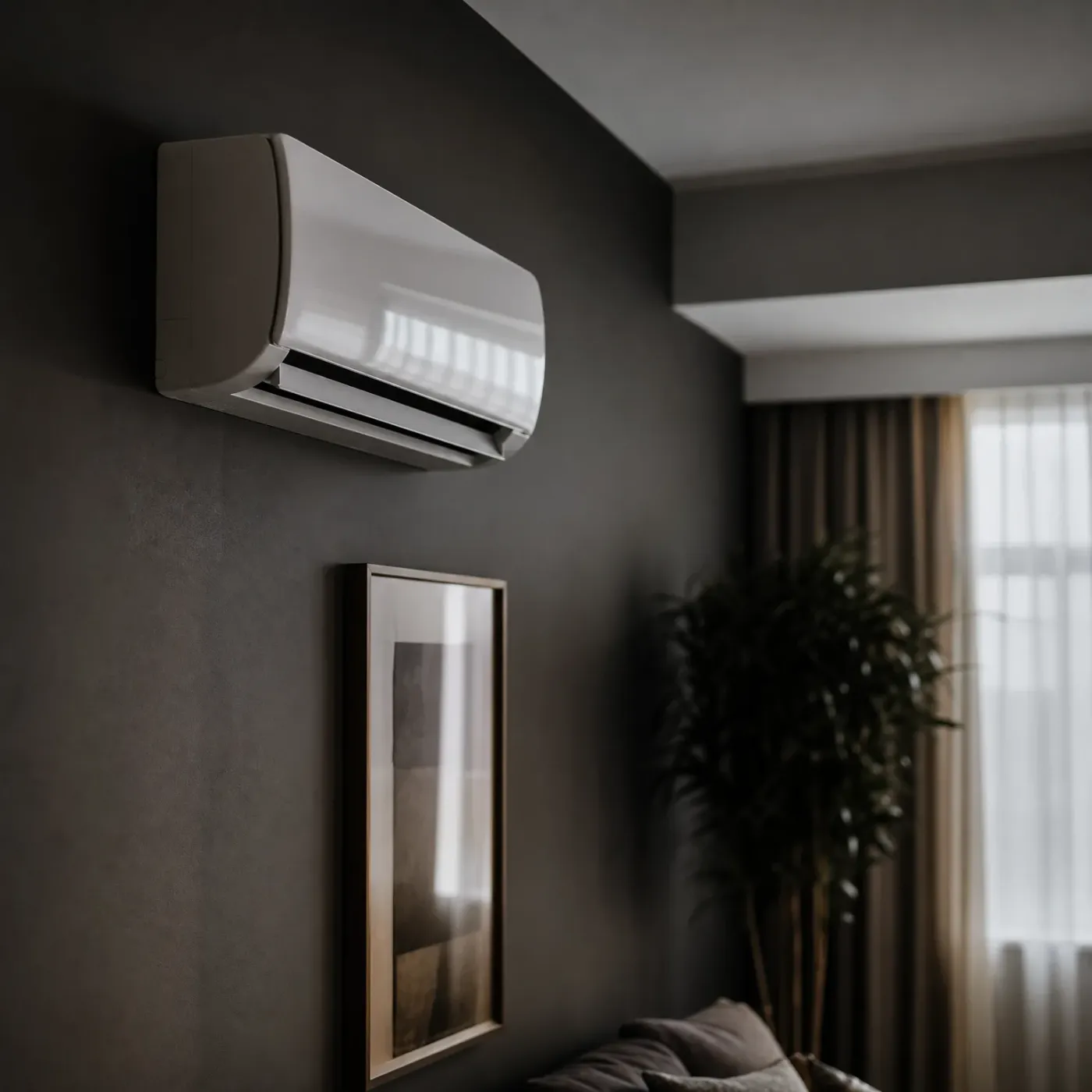











A white wall-mounted mini-split air conditioner on a dark gray interior wall above a framed picture, with a potted plant and curtained window to the right.

A pro who works on mini splits

Is a cold-climate mini split worth it in Colorado

A cold-climate mini split has to earn its keep against a gas furnace and hold up through a Colorado winter, not just a mild one. This page looks at what that unit is actually doing in your home, in your weather, on your gas-and-electric bill. If you want a contractor who knows cold-climate installs to look at your setup, you can get matched with one below.

Get matched

Yes, if you're pairing it with the gas furnace most Colorado homes already have, rather than trying to replace that furnace outright. A cold-climate mini split keeps working at temperatures well below zero, where an older or standard heat pump starts losing capacity and leans hard on backup heat. Used that way, it takes over the mild shoulder months and the cold-but-not-brutal stretches of winter, running on electricity instead of gas, and lets the furnace handle the coldest nights. In summer, since Colorado's heat is dry, a mini split cools efficiently without fighting humidity the way units in muggier states do. Where it stops making sense is if you expect it to carry the whole winter alone in a house that gets well below zero regularly. As a second system working alongside gas heat, it earns its keep. As a sole heat source through a hard Colorado winter, that depends on how cold your specific location actually gets.

A woman wrapped in a cream textured blanket sits in an armchair beside a lit lamp and a dark window, with an open book in the foreground.
A bearded man in a blue and brown plaid flannel shirt stands indoors looking out a window at snow-covered trees, with a ceramic mug on the windowsill.

The compressor outside doesn't just turn on and off. It ramps up and down depending on how cold it is, so the system can hold steady heat instead of blasting and stopping. That works fine down to a point. Somewhere around 0 to 5 degrees outside, the unit hands the job to your gas furnace rather than fighting to keep up on its own. This is built into the control logic, and it happens on temperature alone, not on what's cheaper to run that week. The outdoor unit is still pulling heat from outside air even when that air is cold, running the refrigeration cycle in reverse from how it runs in July. When frost forms on the outdoor coil, which it will, the system briefly reverses itself to melt it off, then goes back to heating. Come summer, the same indoor head switches to cooling and pulls what little humidity is in the air out of your house, same as any air conditioner would. None of this is something you manage day to day. It's just what's happening behind the wall when the temperature changes.

How the Switchover Actually Works

  • A cold-climate mini split uses a variable-speed compressor that ramps output up as the outdoor temperature drops, instead of cycling on and off at one fixed speed.
  • Below a set outdoor temperature, usually somewhere around 0 to 5 degrees, the system's logic hands heating load over to the gas furnace rather than straining to keep up alone.
  • The outdoor unit pulls heat out of outside air even when that air is cold, using a reversing valve to run the refrigeration cycle backward from how it runs in summer.
  • Defrost cycles kick in automatically when frost builds on the outdoor coil, briefly reversing the system to melt it off before switching back to heating.
  • In your dry Colorado summers, the same indoor head runs as a standard air conditioner, pulling humidity out of air that usually doesn't have much to begin with.
  • The thermostat or control board decides which source, the mini split or the furnace, handles a given stretch of weather based on outdoor temperature alone, not on which one costs less to run.
A gray-haired, bearded man in a dark coat dusted with snow stands smiling in a dimly lit room with a lamp, mirror, framed art, and a sofa in the background.
An older man with white hair and a beard, wearing a dark snow-dusted coat and scarf, stands in a warmly lit interior hallway with a framed landscape picture, a table lamp and a potted plant behind him, and a snowy view through a window at left.
An older man in a dark snow-flecked overcoat and scarf stands smiling in a warmly lit home entryway, with a glass-paned door showing darkness outside and a lamp-lit room visible through a doorway behind him.
An older man with gray hair and a beard, wearing a dark snow-dusted jacket and scarf, stands smiling in a warmly lit interior hallway with a lit table lamp, a vase of dried branches, and a framed picture in the background.
  1. The thermostat calls for heat and signals the indoor head.

  2. The variable-speed compressor in the outdoor unit ramps up.

  3. Refrigerant pulls what heat exists in the cold outside air.

  4. The compressor compresses that refrigerant to raise its temperature further.

A wall-mounted white mini-split air conditioner indoor unit with visible dust and grime around its outlet vent, installed near the ceiling on a plain light-colored wall.
Before you get your mini split installation
A white wall-mounted mini-split indoor unit on a light gray interior wall, with a white curtain on a black rod at left and a leafy plant in the lower left corner.
After you get your mini split installation
A two-story house with light beige horizontal siding, a gabled roof, a small covered front porch with dark door, and shrubs along the foundation, set behind a mown lawn and wet sidewalk with large leafy trees on both sides.

A dew point of 42°F is dry air, averaged across June, July and August for Colorado. That's the figure behind why your mini split cools so well here on the hottest afternoons. A compressor doesn't fight moisture the way it would in a sticky climate, so more of its work goes straight into dropping the temperature in the room. You'll notice it in how fast the space feels comfortable, not just cooler. The harder question with a cold-climate unit is always the winter side of the ledger, and that's where finding a contractor who actually knows how to size and set up the system for both ends of a Colorado year matters. Rather than calling around and explaining your setup to one installer after another, you can get matched with one who already works on these systems in this climate.

NASA POWER T2MDEW county cells weighted by homes

Get your mini split to the right pro

Skip the round of in-home estimates for a new mini split.

No fee to send it, and nothing to sign.

A white wall-mounted mini-split indoor unit high on a beige interior wall, with a potted olive-like tree at right and an armchair and window visible through a doorway at left.

Clean and running right

A mini split that gets a yearly cleaning keeps its coil and filter clear, so it can move the heat it's rated for in both directions. That matters most in a Colorado winter, when the unit is already working harder to pull heat from cold air. A clean one holds its output down to the temperature it's built for.


A wall-mounted mini-split air conditioner indoor unit with visible dust and staining, installed on a beige interior wall below white crown molding.

Caked with dust and grime

Dust and grime across the vents and casing block airflow before the air ever reaches the coil. The compressor has to run longer to move the same amount of heat, which shows up on your electric bill. Left alone through a dry Colorado summer, that buildup only thickens.

A woman in a cream sweater and jeans stands in the open doorway of a white stucco house, holding the dark door, while a man in a dark quilted jacket seen from behind walks toward the entry past potted plants.

A cold-climate mini split earns its place here

In Colorado, a cold-climate mini split is worth it next to your gas furnace. It takes over the mild stretches of the year and backs off when the real cold sets in, and your furnace covers what it can't. The dry summer air here is the easy part; the unit barely has to work for it.

Whether it's worth it for your house still depends on your home, your furnace, and how the two are set up to work together. That's not something a page can answer for you. A contractor who installs these systems in Colorado can look at your setup and tell you where it fits, and once you're matched with one, they'll reach out to you directly, so you're not stuck calling around and repeating the same questions to five different companies.

A living room corner with a beige sofa and cushion, a round wooden coffee table holding a pale ceramic vase of eucalyptus stems and a wooden bowl, and a curtained window with a potted plant above a latticed radiator cover in the background.
A single-story stucco house at dusk with a lit paver walkway lined by low path lights, desert plants and boulders in front, and distant mountains under an orange and blue sky.

Mini Split Installation

The right pro for this job

Step 1 of 3: Equipment
  • A corner of a room with an upholstered wood-framed armchair holding a floral pillow, a round side table with a ceramic lamp, books and a vase of greenery, a framed landscape painting on the wall, a patterned rug, and a sunlit multi-pane window.
    • A local installer who puts in mini splits gets your project.
    • Say what's going on with your mini split, and a pro who works on them reaches out.
  • Interior corner with a wood-framed window showing green foliage outside, a framed landscape print on a beige wall, and a rounded stone vase of leafy branches on a wooden cabinet.
    • Send the form and the search for an installer is over.
    • One request and the search for a pro is handled.
  • A pale ceramic vase holding olive branches sits on a dark wooden countertop beside a carved wooden dough bowl, next to a wood-framed window and a light painted plank wall.
    • Skip collecting and comparing quotes for the new mini split.
    • Skip searching for a mini split pro and answer a few questions instead.
  • A dark wood round side table holding a brass lamp with a cream shade, a blue-and-white patterned bowl, and a white textured pot of greenery, beside an upholstered chair with a gray patterned cushion and a white-framed window showing green trees and flowering shrubs.
    • Your request goes to one pro, not a list of companies.
    • One installer gets your project, so there's no bidding war over it.





