
Best mini split setting for a Colorado winter
Set your mini split to heat mode and leave it at a steady temperature, usually around 68 to 70 degrees, instead of turning it up and down through the day. A mini split works best running steady because it heats by moving outside air through a heat pump, and that takes longer to catch up after a big setback than a furnace does. In a Colorado winter, the outdoor unit also has to work through cold, dry air and will frost over at times. It should go into a defrost cycle on its own and clear itself within a few minutes. If frost builds up and stays, or the unit runs constantly without warming the room, something is off, often low refrigerant or a coil that needs cleaning. Most homes here lean on gas heat and use the mini split for a room or two, so keep an eye on that unit specifically rather than assuming it behaves like the furnace.







What a steady setting saves you this winter
Most homes around here heat with gas, so your mini split is likely doing secondary work, taking the edge off a bedroom or a room the furnace doesn't reach well. That makes the setting easy to ignore until the unit starts short cycling or blowing cooler air than it should. Colorado winters put real demand on a heat pump, and a unit that's cranked up and down all day builds frost on the outdoor coil faster than one left to run steady.
If you're the type who catches a rattle or a weak fan before it turns into a repair bill, the setting is the easy part. What's harder is finding someone who'll actually look at the indoor coil and the outdoor unit before a cold snap finds the problem for you. Once you send the form, you're done calling around, done explaining the same thing to three different companies, done comparing quotes that don't line up. Someone qualified takes it from there.

Why the coil ices up first
A mini split pulls heat from outside air even when it's well below freezing, and the outdoor coil runs cold to do it. Left to cycle on and off all day, that coil collects frost faster than its defrost cycle can clear, especially on the gray, damp days that show up between Colorado cold snaps. A steady setting keeps the coil closer to a stable temperature, so it defrosts on its normal schedule instead of fighting a buildup every time you crank the temperature back up.

What a dirty filter costs you
The indoor filter screens the air before it crosses the coil, and a mini split running on and off at odd temperatures pulls harder on that filter each time it restarts. A filter clogged with dust and pet hair blocks airflow across the coil, and the unit has to run longer to push out the same heat. Checking it every month or two during the winter here catches that early, before the system is working against itself instead of for you.
Why does your mini split sound different lately?
Listen to it next time it kicks on. A steady unit hums low and even. One that's been cycled up and down all day tends to run longer to catch up, and you'll hear it labor a little before it settles. Check the indoor unit too. Frost on the outdoor coil or ice creeping around the lines outside means it's been working harder than it should. Inside, a faint musty smell from the vents or a film on the louvers points the same direction. None of that stops the heat outright, but a coil that stays iced or dirty loses capacity over the winter, and the room it's covering won't hold its temperature the way it used to.



Let someone else find the pro
Fill out one form instead of calling around for a mini split tune-up.
Send the request and finding a pro stops being your problem.
You only hire the pro if you want to.
Steady setting or up and down
Steady setting
- The outdoor coil stays at one temperature instead of cycling between cold and colder, so frost has less chance to build faster than the defrost cycle clears it.
- The compressor ramps up once and holds, which is the easier way for it to run through a Colorado winter.
- A room that depends on the mini split, rather than the furnace, holds its temperature instead of drifting while the unit catches up.
- The indoor coil and filter stay cleaner longer because air keeps moving through them at a steady rate instead of surging on restart.
- You can hear the difference: a steady unit hums low and even instead of laboring to catch up.
Up and down
- Every time you raise the temperature, the compressor has to work harder to close the gap than it would holding steady.
- The outdoor coil gets colder more often during restarts, and frost has more chances to build between defrost cycles.
- A room the furnace doesn't reach well swings further between its low and its target, since the mini split is doing the catching up alone.
- The coil and louvers pick up grime faster when the system is cycling hard instead of moving air at a steady pace.
- A unit that's been run this way tends to run longer on each cycle, which is the labored sound you'll notice before it settles.
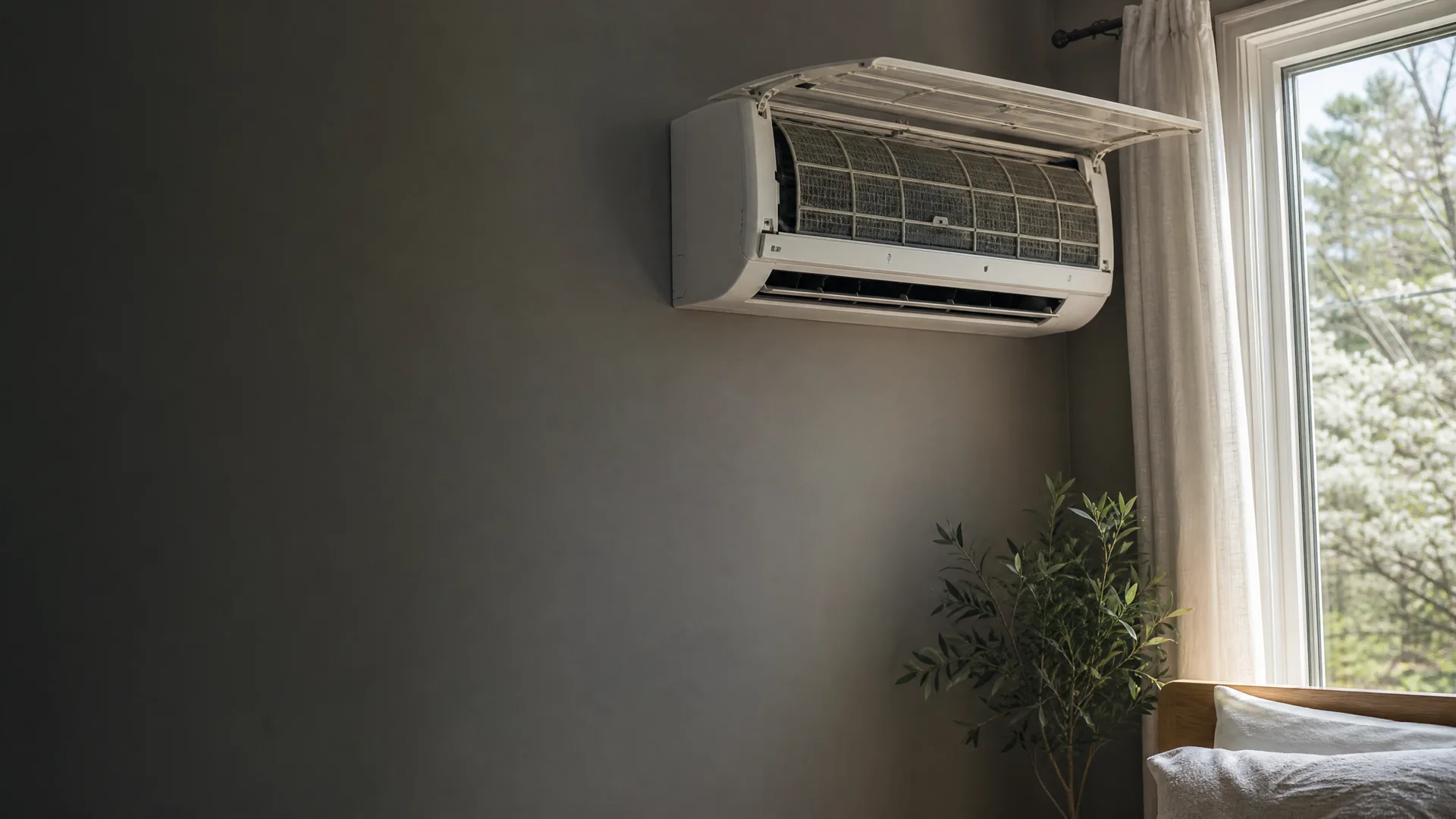
The bedroom is warm with spring light by nine, the kind of day in April when the furnace hasn't kicked on since morning. You pop the front cover off the mini split before you open the windows, just to check it before the hot months start. The filter screen comes out grey, matted down in a way that catches you off guard. You run a finger along it and dust comes away in a line. You think about the nights this winter when you had it running steady at 69, the low hum you got used to, and wonder how long it was pulling air through that before you noticed anything different in the sound.
Power costs 15.69 cents per kilowatt-hour statewide
At 15.69 cents a kilowatt-hour, running your mini split's compressor harder than it needs to shows up on the bill. A steady setting holds the compressor at one low effort instead of making it ramp up again and again, so you're paying for heat, not for restarts.
EIA-861 2025 statewide residential average
The setting, and where that leaves you
- A steady setting between 68 and 70 degrees keeps the outdoor coil from cycling between cold and colder all winter.
- The compressor ramps up once and holds, instead of laboring to catch up after every temperature swing.
- Gas heat still does the main work in most homes here, so the mini split only has to hold a steady load on the rooms it covers.
- A clean, unfrosted coil keeps the unit quiet and keeps the bill tied to heat produced instead of restarts.
- Checking the filter and coil before the cold sets in catches the small problems before they turn into a unit that won't clear frost on its own.
- Left alone, a mini split that's bounced up and down all day will show it in sound, in frost, and in what it pulls off the meter.
Set it to heat, pick a number around 68 to 70, and leave it there through the winter. That's the whole answer. Everything else in this is about why: a coil that holds one temperature instead of swinging between cold and colder, a compressor that ramps up once instead of straining to catch up, a bill that reflects heat instead of restarts. Your furnace is still doing the main work in most homes around here. The mini split is covering a bedroom or a room the ducts don't reach well, and a steady setting is what keeps that smaller job from turning into a bigger one. Checked before the cold really sets in, the filter and coil tell you early whether the unit can still clear frost on its own. Left unchecked, you find out the hard way, usually on the coldest week of the year, when the unit is already working the hardest and has the least room for a problem.
That's the kind of small thing you'd normally catch yourself, but finding someone to look at a mini split before it's actually broken is its own chore: the searching, the calling around, explaining the same thing twice to two different people, sorting through quotes that don't tell you much. Sending the form here skips that part. You're not left tracking down who's available or who answers the phone. The finding-help work is done, and what's left is just getting it looked at.





One request and it's handed off
Skip calling around to set up a mini split tune-up.
Asking costs nothing, and the choice to hire stays yours.